


Watermelon Drop
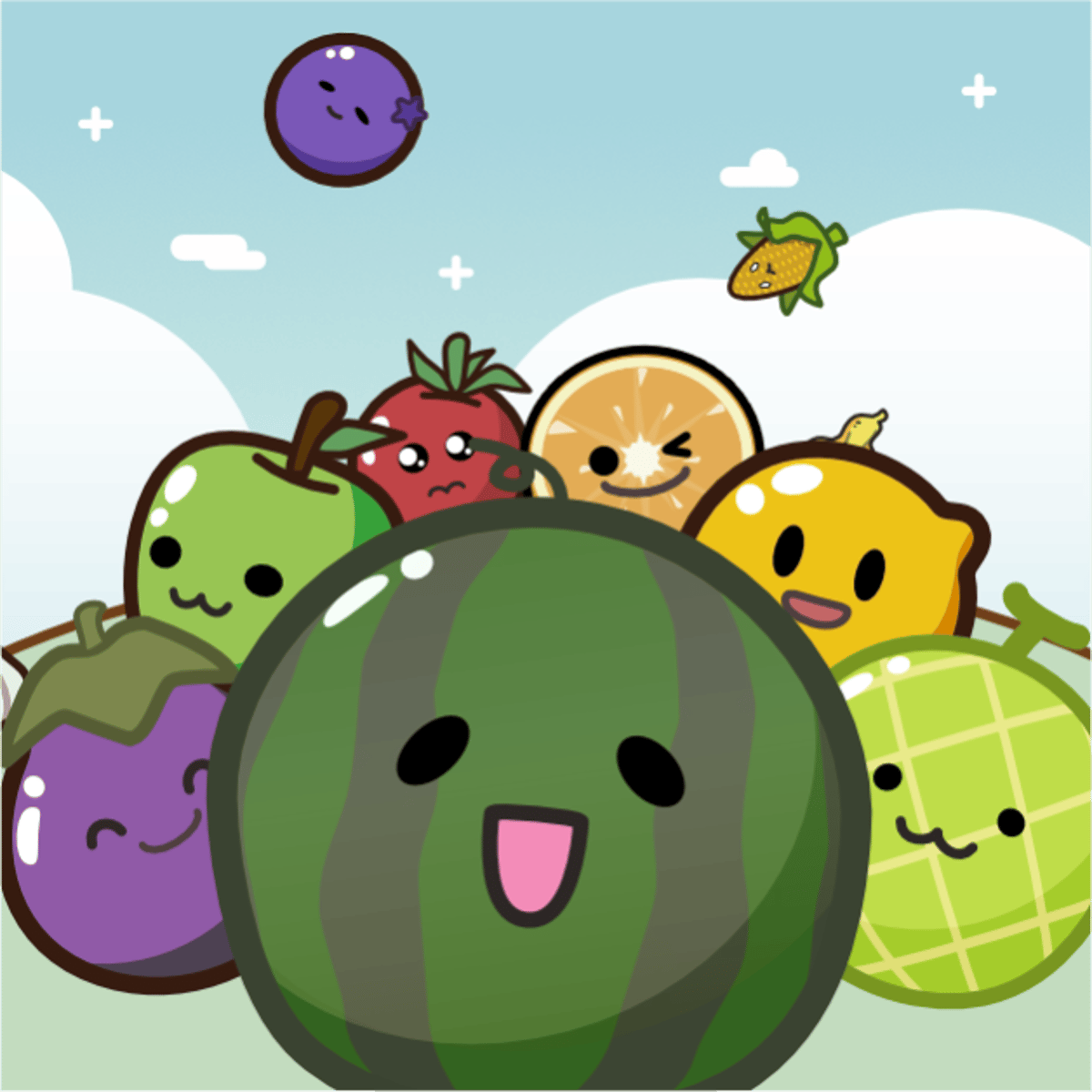
Simple puzzle games hook millions for a reason. Watermelon Drop doesn’t need flashy graphics or a complex story. It hands you a fruit, asks you to drop it into a cup, and before you know it, you’ve lost an hour. This is a true “suika” game—a direct descendant of the viral watermelon-merging phenomenon. Its appeal is immediate, but its challenge runs deceptively deep. The physics feel both predictable and chaotic. A cherry bounces differently than a coconut, and understanding those nuances separates casual play from high-score mastery. The core loop is addicting because progress is tangible: watch a humble strawberry become a cluster of grapes, which becomes something even larger, all while you manage the ever-encroaching danger line.
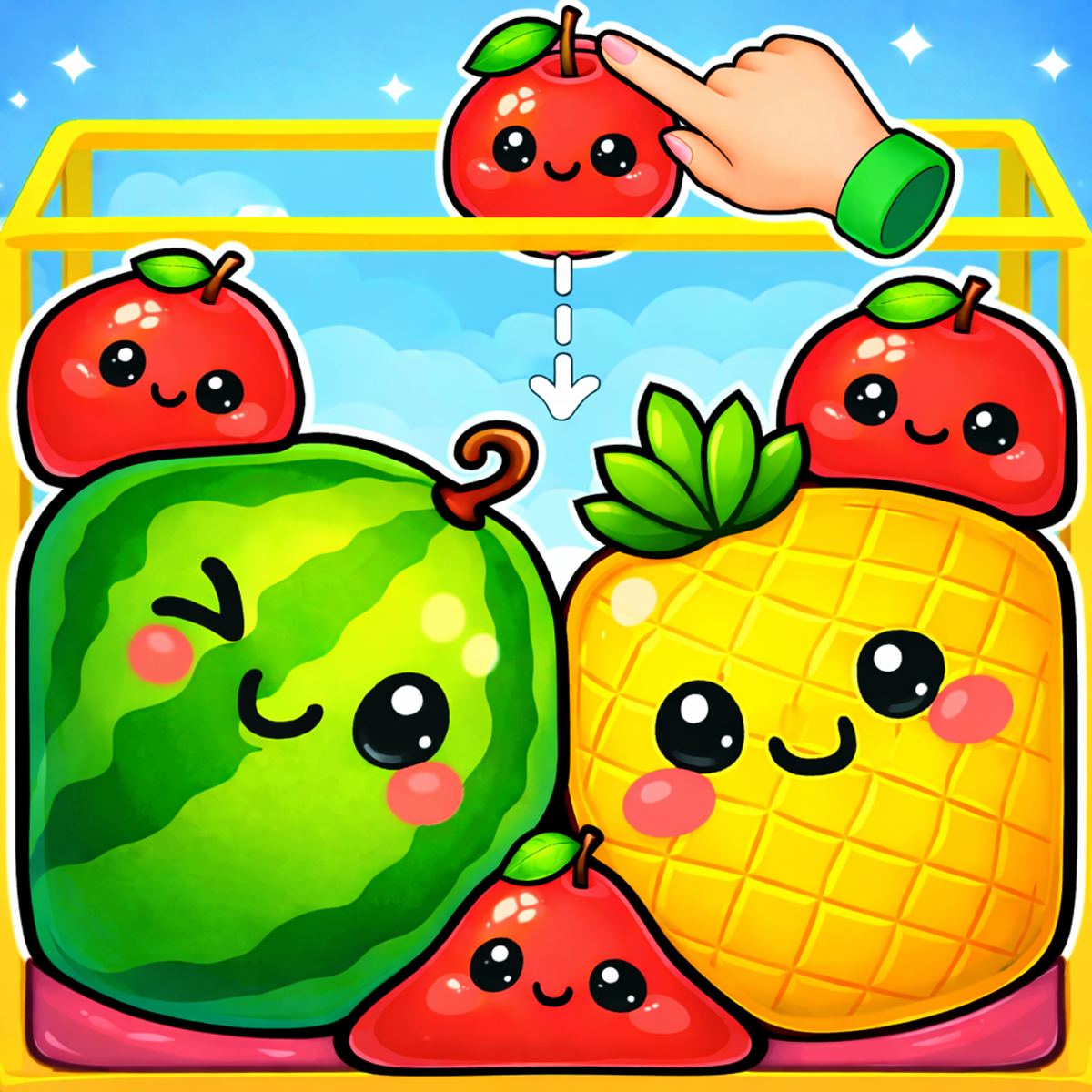
The goal is simple: drop fruits and vegetables into a cup. When two identical items collide, they merge into a larger, different food. Two cherries become a strawberry. Two strawberries become a grape. Keep merging to create ever-bigger produce, all the way up to the elusive watermelon. The catch? The cup has a top. If your stack of food breaches that line, the game is over. It’s a constant balance between spatial planning and the chaotic physics of bouncing fruit. Every drop is a calculated risk. Do you place that blueberry next to its twin for an immediate merge, or tuck it away to save space for a more valuable combo later? The game constantly forces these micro-decisions, and they add up fast.
How to Play
You’ll see a cup and a queue of incoming produce. The item you’re about to drop is shown at the top. Your job is to aim and release it. The cup is a simple vessel, but the space inside is your canvas and your battlefield. A faint vertical drop guide helps you judge where your fruit will land. The queue is your lifeline—it always shows you the next one or two items, giving you a sliver of foresight.
On Desktop:
Move your mouse to position the drop guide horizontally over the cup. Click the left button to release the item. It falls straight down from that point. A mouse offers great precision for tight shots where you need to bank a strawberry off a wall into a specific nook. Watch your cursor’s position relative to the cup’s top; small movements translate to precise placement.
On Mobile:
Tap and drag your finger across the screen to position the guide. Lift your finger to drop. The touch controls are intuitive, but the lack of a cursor means you need to develop a feel for the screen. Your finger might block part of the view, so get used to positioning it just off to the side for better visibility.
That’s the entire control scheme. The real game happens in your head as you decide where each piece lands. The queue shows your next item, so you can plan—but not too far ahead, since it changes as you play. A critical skill is learning to “read” the physics. Watch how a coconut thuds and barely bounces compared to a wild cherry ricochet. That knowledge dictates your placement strategy.
Tips and Strategies
Mastering Watermelon Drop means thinking a step ahead and respecting the physics. It’s not a reflex game; it’s a thinking game played with a physics engine.
Build from the bottom up, and sideways. Don’t just drop items in the center. A solid strategy is to build a foundation along the bottom and sides of the cup. This creates stable “walls” that contain future merges and stop smaller items from rolling into bad positions. Aim for larger merges near the bottom to create space. Think of it like landscaping—you want to create flat valleys and stable platforms. Dropping a coconut into a deep, V-shaped valley between two orange walls is perfect. It lands safely, and you’ve built a stable shelf above it for future fruits.
Use the walls. The cup’s sides are your friends. Bank a fruit off a wall to land it in a tighter spot, or to line it up perfectly with its twin for a merge. A gentle tap can nudge a piece into place without sending it into a chaotic tumble. For example, if you need to place a strawberry next to its twin but they’re separated by a small gap, drop the new strawberry so it hits the side wall first. The bounce can roll it right into place. This becomes essential for precision when the cup is getting full.
Manage your smallest items. Those little cherries are building blocks, but they’re also a liability if they pile up. Merge pairs of cherries quickly to clear them out. Getting stuck with a crowd of tiny items that won’t merge is a fast way to hit the top line. A cluster of four or five unpaired cherries is a disaster—they create a springy, unstable surface that will catapult larger items into the danger zone. If you see cherry clusters forming, make clearing them a priority, even if it means forgoing a more valuable merge elsewhere.
Look for chain reactions. A well-placed merge can sometimes cause the resulting item to bump into another pair, triggering a second merge. These cascades are satisfying and space-efficient. While you can’t always engineer them, dropping items in a way that allows for potential chains is a sign of advanced play. For instance, if two grapes sit side-by-side with a strawberry hovering above, dropping a strawberry to merge with a twin on the pile might create a coconut that nudges those grapes together. That’s a triple score from one drop.
Develop a “merge pipeline.” Instead of thinking one move ahead, think in sequences. If your queue shows a cherry, then a strawberry, then another cherry, don’t drop the first one randomly. Place it with purpose—maybe in a spot where, after the strawberry is dropped elsewhere, the second cherry can complete a merge. This proactive mindset keeps the board from becoming a scattered mess of mismatched fruit.
Common Mistakes
Here’s where most new players trip up, leading to swift and frustrating game overs.
Rushing the drop. There’s no time limit. Take a second to line up your shot, especially for bigger items like coconuts or pineapples. A bad drop of a large fruit creates an uneven foundation that’s hard to fix. A coconut landing half-on, half-off a smaller fruit creates a ramp that sends everything sliding, ruining your careful plans.
Ignoring the edges. Focusing only on the cup’s center builds a tall, unstable tower that quickly breaches the top. Remember to use the sides and build out as well as up. The ideal board is wide and relatively flat, not a precarious pyramid. Use the curved bottom corners to your advantage—they naturally corral smaller items.
Hoarding small fruit. Trying to save cherries for a “better” merge later usually backfires. The cup fills up fast. Merge pairs as soon as you can, unless you have a very specific plan. Holding onto a single cherry hoping its twin will appear is a gamble that often leaves you with useless fruit taking up prime space.
Panicking when crowded. When the cup is nearly full, it’s easy to drop items randomly. Stick to your plan. Look for the last possible merges. Sometimes one correct merge can salvage a doomed game by triggering a chain reaction that frees up space. Take a breath. Scan the board. Often, one forced merge between two larger items you’ve been avoiding can collapse the stack just enough to survive.
FAQ
Is Watermelon Drop free to play?
Yes, it’s completely free in your browser. No downloads or purchases are needed for the full game. There are no ads interrupting gameplay, making for a smooth, focused experience.
Who made this game?
Watermelon Drop was created by developer yeqwep. They also made other popular puzzle games like Cats Drop, which applies a similar merging mechanic to different objects. Their design focuses on simple, satisfying core loops.
Can I play it on my phone?
Absolutely. The game works great on desktops and mobile devices. The touch controls are just as responsive as mouse controls, and it scales well to different screen sizes. It’s a perfect commute or break-time game.
How is my score calculated?
Your score increases with each merge. Creating larger fruits awards more points. Merging two cherries gives a small bonus; merging two coconuts gives a massive one. The ultimate goal is to create a watermelon, worth a huge point haul. Your final score determines your letter grade—aiming for that A-rank is the true endgame. The grading scale is hidden, but consistent play and successful watermelon creations lead to high ranks.
Why is it called a “suika” game?
“Suika” is the Japanese word for watermelon. The genre was popularized by a viral game called “Suika Game,” originally a Nintendo Switch title in Japan. Its concept—merging fruits to create a watermelon—captivated players worldwide and spawned many browser-based interpretations like this one. Watermelon Drop captures that same blend of simplicity and deep, physics-based strategy.
So go ahead, give it a drop. Just don’t blame us when “one more game” turns into twenty. Chasing the perfect board state, where one final cherry triggers an earth-shattering cascade of merges culminating in a watermelon, is a powerful hook. You’ll get there eventually. Probably.