


Numbers Match 2448
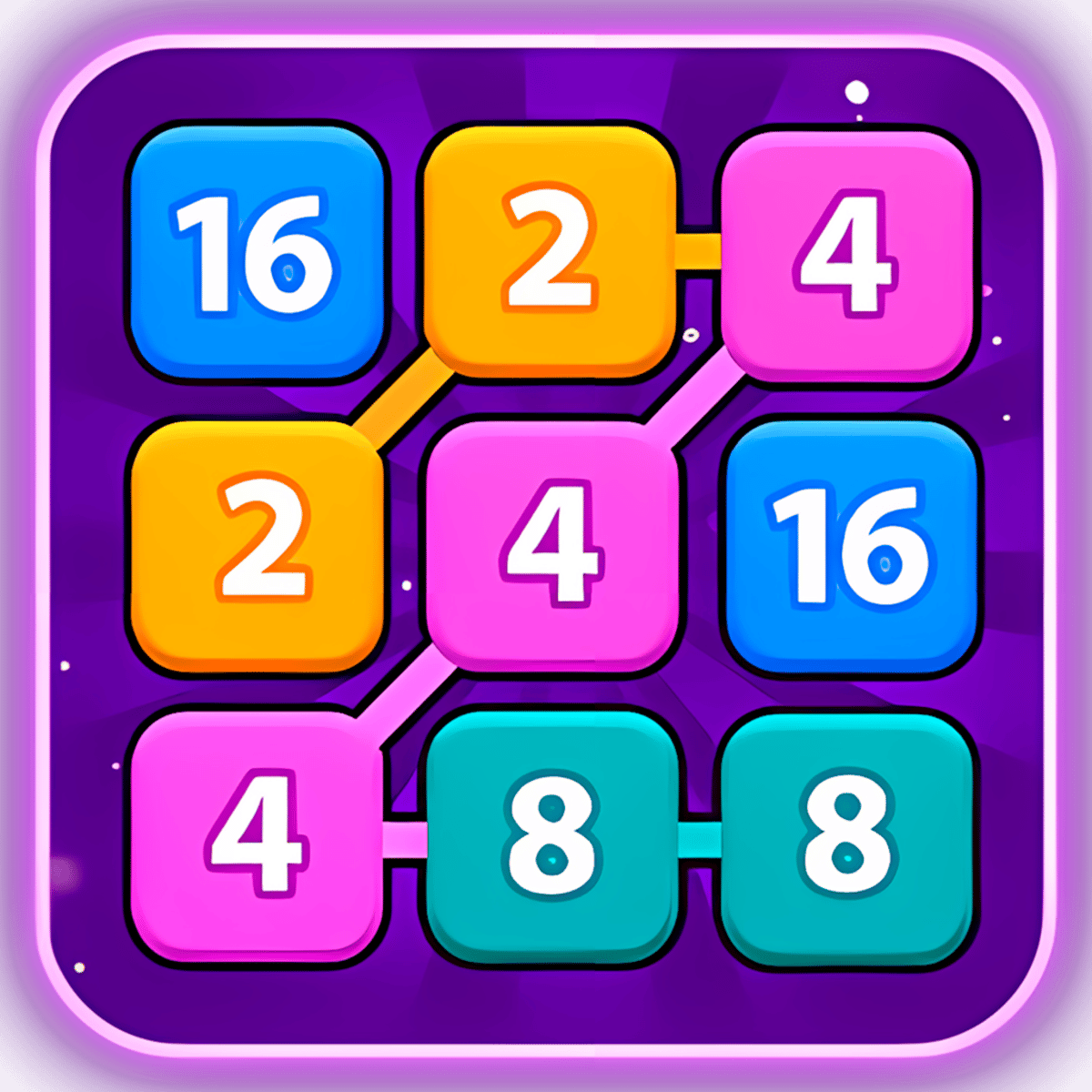
Numbers Match 2448 is for anyone who’s played a number-merger and wished for more depth. It looks simple at first: tap and hold to combine matching number tiles. But quickly you realize the board isn’t just a grid—it’s a path with obstacles, hidden pictures, and a lot of decisions. The game feels like a 2048 variant, a match-2 puzzle, and a gentle maze all at once.
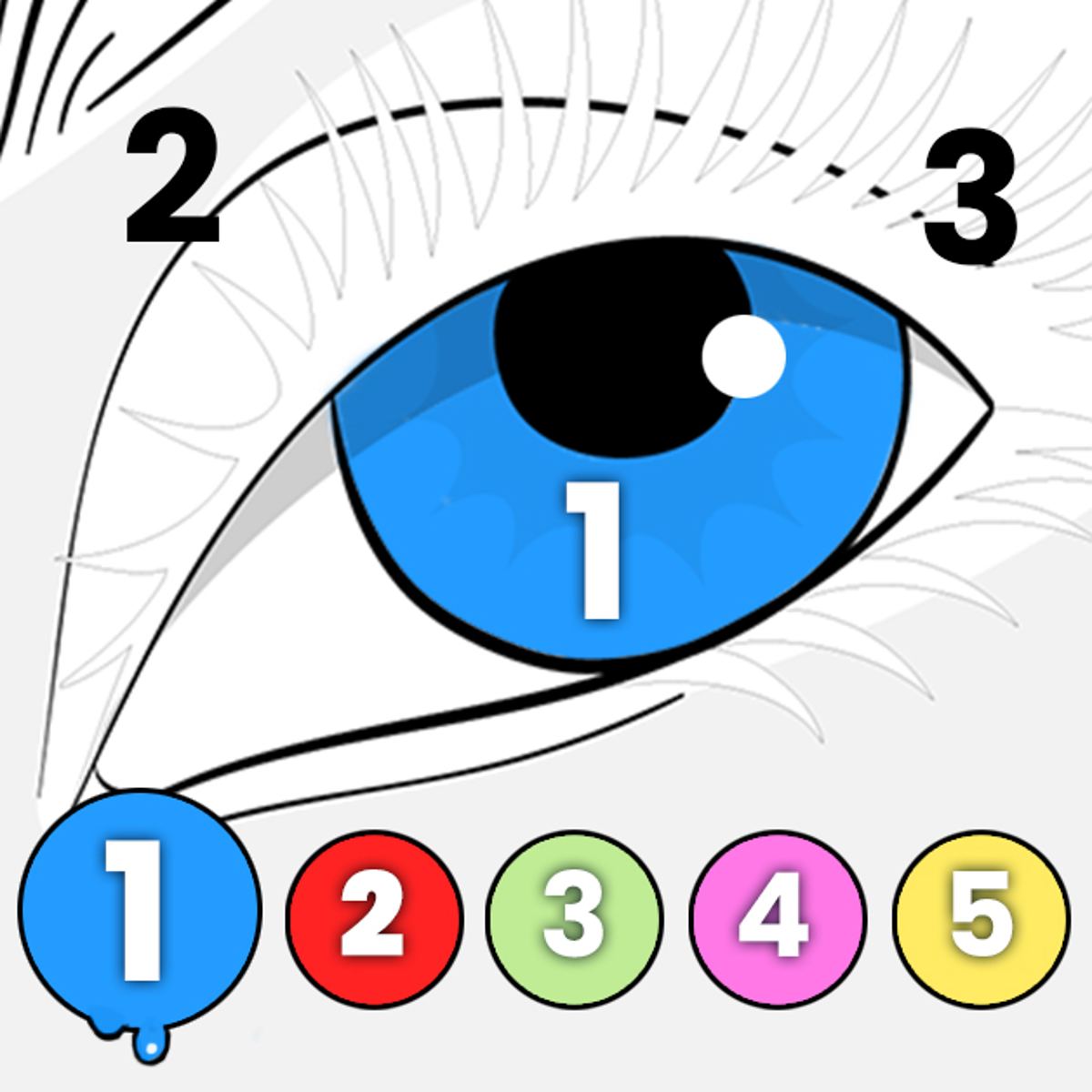
What keeps people playing is how it strings you along. Each level shows a faint outline of a picture you’re slowly uncovering, and the number targets keep nudging you forward. You’re never just merging for a high score—you’re clearing a route, dodging blocks, and trying not to paint yourself into a corner. It’s the kind of game where “one more try” turns into half an hour gone.
How to Play
The goal is straightforward: match pairs of identical numbered tiles to merge them into a tile with a higher number. But you’re not merging for the sake of it. Each level has a specific objective—usually to reach a certain number or clear a path. The board is often cluttered with obstacles like locked tiles, gaps, or immovable blocks that you need to work around.
On desktop, click and hold a tile, then drag it onto its matching partner. The hold gesture is important—you don’t just tap. You press and slide. It takes a second to get used to, but it prevents accidental moves. You can also click a tile to select it, then click its match if that feels more natural. Either way works.
On mobile, do the same with your finger. Touch and hold a tile, then drag it onto the matching number. The touch controls are smooth, and the tiles are big enough that you won’t fat-finger them on a phone. Tablets feel especially good—you get more board visibility.
The core loop: merge two tiles of the same number to get a tile of the next number. Two 2s become a 4, two 4s become an 8, and so on. The target number for each level varies, but you’ll often need to reach 128, 256, or even 1024. Along the way, you’re also uncovering the hidden picture beneath the grid. Each successful merge chips away at the overlay, revealing more of the artwork. It’s a nice double reward: progress numerically and visually.
Features and Game Modes
Numbers Match 2448 doesn’t have a dozen modes, but it offers a few twists that keep the formula from going stale.
Level-based progression. You’re not just playing an endless grid. The game has distinct levels, each with its own layout, obstacles, and target number. Early levels are gentle introductions, but by level 10 or so, you’ll see locked tiles that require a specific number to unlock, or tiles stuck behind walls you need to merge around.
Hidden picture reveal. This is the main hook. Every level has a hidden image behind the tiles. As you merge and clear tiles, parts of the picture are revealed. The art style is pleasant—think colorful landscapes, animals, or abstract patterns. It’s not just a gimmick; it actually motivates you to finish a level. You want to see the full image.
Power-ups. You’ll occasionally get tools like a bomb that clears a small area, or a shuffle that rearranges the board. These are earned through gameplay or found on the board itself. They’re not overpowered—they just give you a nudge when you’re stuck. Using them wisely matters more than hoarding them.
No timer, no pressure. This is a puzzle game you can play at your own pace. There’s no countdown or move limit in most levels, so you can sit and think. That said, some later levels introduce a limited number of moves, which adds a nice spike of tension.
Tips and Strategies
After a few hours with the game, a few patterns become clear. Here’s what actually helps.
Plan your merges, don’t just react. It’s tempting to merge the first pair you see, but that can paint you into a corner. Look a few moves ahead. If merging two 8s will block your path to a needed 16, hold off. Sometimes the best move is to wait for a better pair to appear.
Use obstacles as guides. Locked tiles and gaps aren’t just annoyances—they create natural lanes. Funnel your merges along a specific path, which helps you avoid spreading out too thin. Keep your higher-number tiles clustered near the center, not scattered in corners.
Don’t ignore the edges. Merging against the board’s edge can be safe because you only have three sides to worry about. But if you let a high tile get stuck in a corner, you might have trouble matching it later. Try to keep your biggest number tiles in a spot where they can still be reached.
Power-ups are for emergencies, not for fun. The bomb and shuffle are rare. Don’t waste them on small annoyances. Save the bomb for when a tile is stuck behind an obstacle you absolutely need to clear. Shuffle is best when the board is deadlocked and no merges are possible.
Watch the hidden picture progress. The image reveal isn’t just cosmetic—it shows you which areas you’ve cleared. If a part of the picture is still hidden, that means there’s a tile or obstacle there you haven’t dealt with. Use that as a map.
Focus on one number at a time. Trying to build multiple high numbers simultaneously is a recipe for clutter. Pick a target, say 64, and only merge tiles that help you reach it. Let the smaller numbers sit until you need them.
Common Mistakes
New players often trip over the same things. Here are the biggest ones.
Merging too fast. The hold-to-drag control is deliberate. If you rush, you might accidentally drop a tile on the wrong spot. I’ve done it—you drag a 4 onto another 4, but your finger slips and it lands on a 2 instead. Now you have a 6, which is useless. Slow down.
Ignoring obstacles until it’s too late. Locked tiles that require a specific number to unlock are easy to forget about. You might merge all your 8s into a 16, only to realize you needed an 8 to unlock a gate. Check the board before you commit.
Spreading tiles too thin. The board isn’t huge, but it’s easy to end up with tiles scattered everywhere. When you have a 32 in one corner, a 16 in another, and a bunch of 2s in the middle, you’ve lost control. Keep your high numbers close together.
Hoarding power-ups until the end. I’m guilty of this. You think “I’ll save this bomb for a really tough spot,” but then you never use it and lose the level anyway. Use a power-up when you’re stuck, not when you’re already dead.
Not reading the level goal. Each level tells you what number you need to reach. Sometimes it’s 128, sometimes it’s 256. Don’t assume. I’ve wasted time building a 512 when the goal was only 64. Check the top of the screen.
FAQ
Is Numbers Match 2448 free to play?
Yes, it’s free. You can play it in a browser on Poki or similar sites. There are no paywalls, though you might see ads between levels.
Can I play it on my phone?
Absolutely. It works on both desktop and mobile browsers. Touch controls are fine, and the game adjusts to screen size.
How many levels are there?
The game has a substantial number of levels, but I don’t have an exact count. It’s enough to keep you busy for several hours. New levels may be added over time.
What happens if I get stuck?
You can use power-ups, or you can restart the level. There’s no penalty for restarting, so don’t be afraid to reset and try a different approach.
Who made this game?
It was developed by Yodco Media, the same team behind games like Draw the Road and Block Defense.
The game doesn’t reinvent the wheel, but it doesn’t need to. It takes the merge mechanic, adds a clear progression path and a visual reward, and polishes it until it feels good to play. If you like puzzle games that let you think at your own pace, give it a shot. Just don’t blame me when you lose an hour to “one more level.”