

Tunnel Rush
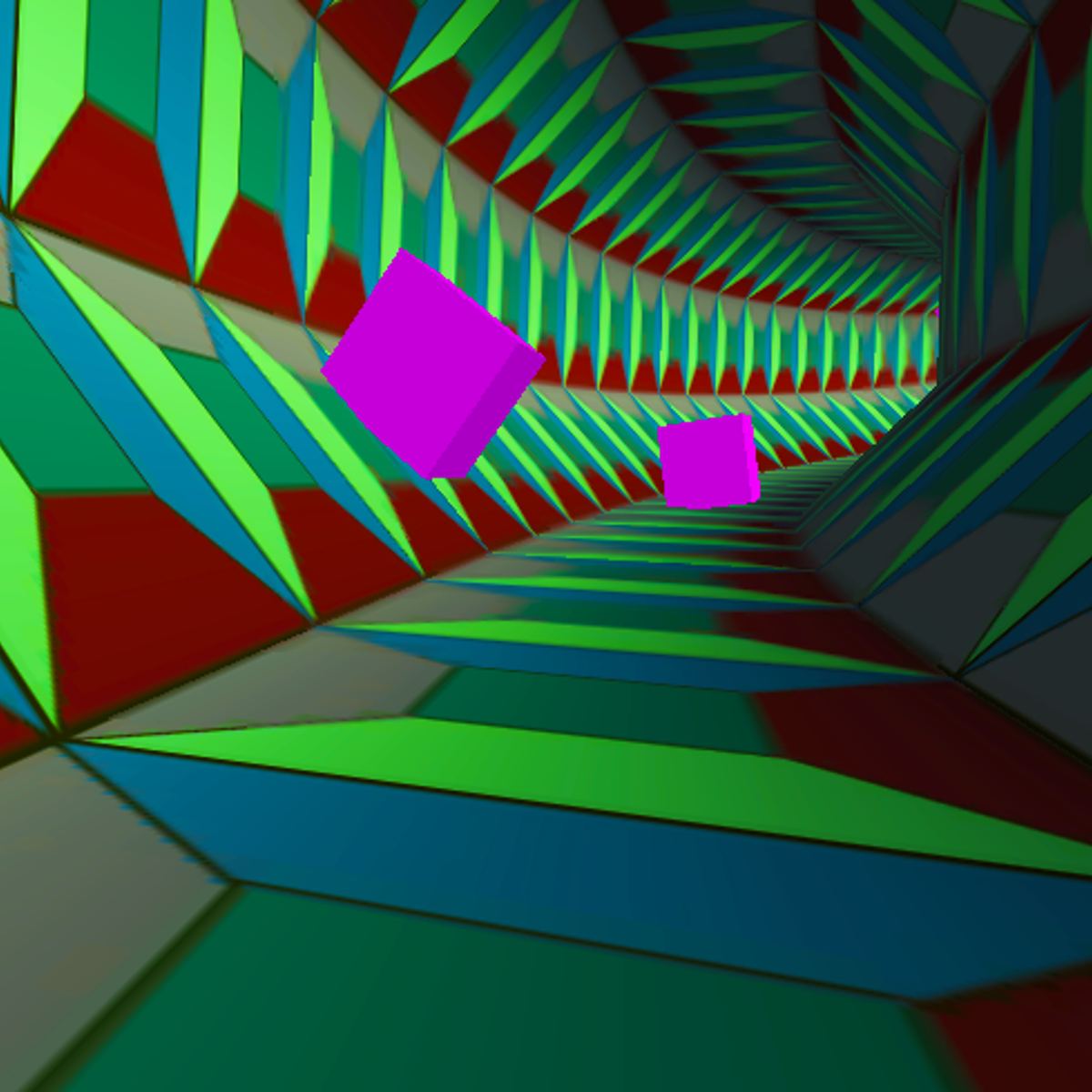
You're dropped into a neon-drenched, three-dimensional tube. Your only task: don't crash. On paper, Tunnel Rush sounds almost insultingly simple. Yet since its 2019 launch, it's collected over a million upvotes on Poki alone. The reason clicks the moment the walls close in at full speed and you squeeze through a gap by a hair. That split-second near-miss delivers a genuine jolt.
Deer Cat Games, a small London-based indie studio, built this. Forget loot boxes, skill trees, or lengthy cutscenes. Tunnel Rush is pure, distilled reflex gameplay stretched across 100 hand-crafted levels. Each one steadily ratchets up the pressure on your reaction time. The result? You can grasp the concept in ten seconds and still be chasing perfect runs hours later.
The learning curve is what hooks you. Early stages lull you into confidence. Then the tunnel starts to twist, the gaps narrow, and obstacles combine in ways that force you to read the screen two or three moves ahead. Failures feel fair, though—like you just needed a sliver more foresight. So you tap retry without a second thought.
How to Play
From the first level to the hundredth, the mission is constant: you're hurtling forward through a tunnel, and obstacles block the path. Dodge them by shifting left or right.
Desktop controls are dead simple. Press the left arrow to go left, the right arrow to go right. There's no jump, brake, or attack. The game scrolls at a fixed pace; your only job is lateral positioning.
On mobile or tablet, it translates to taps or swipes on the left or right side of the screen. It runs smoothly in a phone browser, making it a reliable pick for killing time on a commute.
In two-player mode, Player 1 uses the arrow keys while Player 2 uses A and D. Both players face the same obstacles simultaneously. Victory goes to whoever reads the tunnel more accurately and outlasts the other.
This is a level-based game, not an endless runner. Each of the 100 stages has a defined start and finish. You complete a level by reaching the end without a wall collision. Crashes aren't instant death—you rewind about one second and retry the same section until you break through. There are no lives, no continues, and no penalty beyond that brief reset.
Before starting any level, you choose a difficulty. Easy moves at the slowest speed and earns you one star. Medium is faster and awards two. Hard is the real test: it cranks the speed to the maximum, leaving far less reaction time and rewarding three stars for a clean run. Crucially, difficulty doesn't alter the obstacle layout. The same shapes appear in the same places. What changes is how fast they arrive, meaning your positioning must be sharper and more decisive on higher settings.
Game Modes
Tunnel Rush keeps its focus tight rather than offering a dozen modes.
Solo mode is the core. You progress through the 100 levels in order, earning stars based on your selected difficulty. Stages alternate between tunnel interiors and brief outdoor sections where the geometry shifts and plays tricks on your spatial judgment. Beating a level on Easy is straightforward; perfecting it on Hard is a genuine challenge.
Two-player mode is the other main draw. It splits the screen and puts both players through the same levels simultaneously. There's no handicap system, so the quicker reader wins. It's a surprisingly tense head-to-head affair, especially on the trickier mid-game levels where a single misjudgment ends your run.
Beyond these, the game has no unlockable characters, cosmetics, power-ups, or progression systems. The reward is purely the star rating on each level and the satisfaction of finishing a stage cleanly. Some players will find that refreshingly direct; others might want more incentives. Either way, the moment-to-moment gameplay is compelling enough to carry the experience.
Tips and Strategies
After putting serious hours into Tunnel Rush, certain habits separate those who clear Hard mode from those who stall around level 30.
Look ahead, not at your car. Your instinct is to watch the tunnel section directly in front of you. Fight that. Train your eyes to focus further down the tube so you can see what's coming two or three obstacles away. By the time a barrier reaches you, you should already be lined up with the gap. This single adjustment is the biggest skill jump you can make.
Start on Easy, then jump to Hard. Easy lets you learn each level's layout at a comfortable pace. Once you know the obstacle sequence, switch to Hard and execute what you've learned. Medium is useful, but the payoff from Easy to Hard is where the real star counts live.
Favor small movements. New players tend to slam from one side of the tunnel to the other. Most dodges actually require a subtle nudge—half a tunnel width, not the full span. Overshooting a move is just as deadly as reacting too late, especially when gaps come in quick succession.
Stay centered when possible. Positioning yourself in the middle gives you the most options. If a wall appears on either side, you have room to move in either direction. Drifting to one edge might feel safe momentarily, but it cuts off your escape route for the next obstacle.
Don't panic during outdoor sections. The transition from tunnel interior to exterior can be disorienting. The geometry changes, the perspective shifts, and your spatial awareness feels off. Take a breath. The dodge mechanics are identical. The scenery is different, but the gameplay isn't.
Treat the reset as a learning tool. When you crash, note exactly where the obstacle was and how it moved. That one-second rewind replays the same segment—use the information. If a wall rotated into your path, expect it to rotate the same way next time. Pattern recognition is your best friend.
Common Mistakes
Reacting instead of anticipating. The biggest failure in Tunnel Rush is treating it like a pure reaction-speed game. It isn't. Levels are hand-designed; obstacles follow predictable sequences. Players who react to each barrier individually get overwhelmed by level 40. Those who anticipate the sequence cruise through level 80.
Starting on Hard immediately. Ego-driven difficulty selection is a fast track to frustration. Hard mode makes gaps arrive much sooner, and if you don't already know what's coming, you'll spend more time resetting than playing. Easy mode isn't beneath anyone—it's your rehearsal stage.
Ignoring the one-second reset window. Some players treat a crash like a full restart and lose focus during the brief rewind. That window is still gameplay. Use it to reposition and prepare for the obstacle that just beat you.
Focusing on the walls instead of the gaps. This sounds counterintuitive, but staring at solid barriers makes you tense and overcorrect. Look for the open space. Your brain processes "go there" faster than "don't go there."
Quitting too early. The difficulty spikes around levels 25–35, where obstacle combinations get genuinely tricky. Many players assume the game only gets harder and bail. In reality, those levels are a filter. Push through, and the following stretch is more manageable. You'll have sharpened skills that carry you further.
FAQ
How many levels does Tunnel Rush have?
The game has 100 levels. They rotate between tunnel interior and exterior environments, so the visual backdrop and spatial framing keep changing even as the core dodge mechanics stay consistent.
Does the game get faster as you progress?
No. The speed remains constant within any given difficulty setting. What increases is the complexity and tightness of the obstacle layouts. Later levels feature more intricate patterns and narrower gaps, but the tunnel's scroll speed doesn't ramp up mid-run.
What does changing the difficulty actually do?
Difficulty controls how fast obstacles approach you. Easy is the slowest setting and awards one star per level. Medium is faster and grants two stars. Hard is the fastest and gives three stars. The level design itself doesn't change—only the timing window for your inputs.
Can I play Tunnel Rush on my phone?
Yes. The game runs in mobile browsers and supports touch controls. Tap or swipe on the corresponding side of the screen to move left or right. It works on both phones and tablets without needing an app download.
Is there a sequel?
Deer Cat Games released Tunnel Rush 2, which builds on the original formula with new level designs and refinements. If you finish all 100 levels and want more, the sequel is the natural next step.
Tunnel Rush doesn't try to be anything more than what it is: a pure test of timing and spatial reading, wrapped in eye-catching neon visuals. Sometimes that's exactly the kind of game worth loading up.