





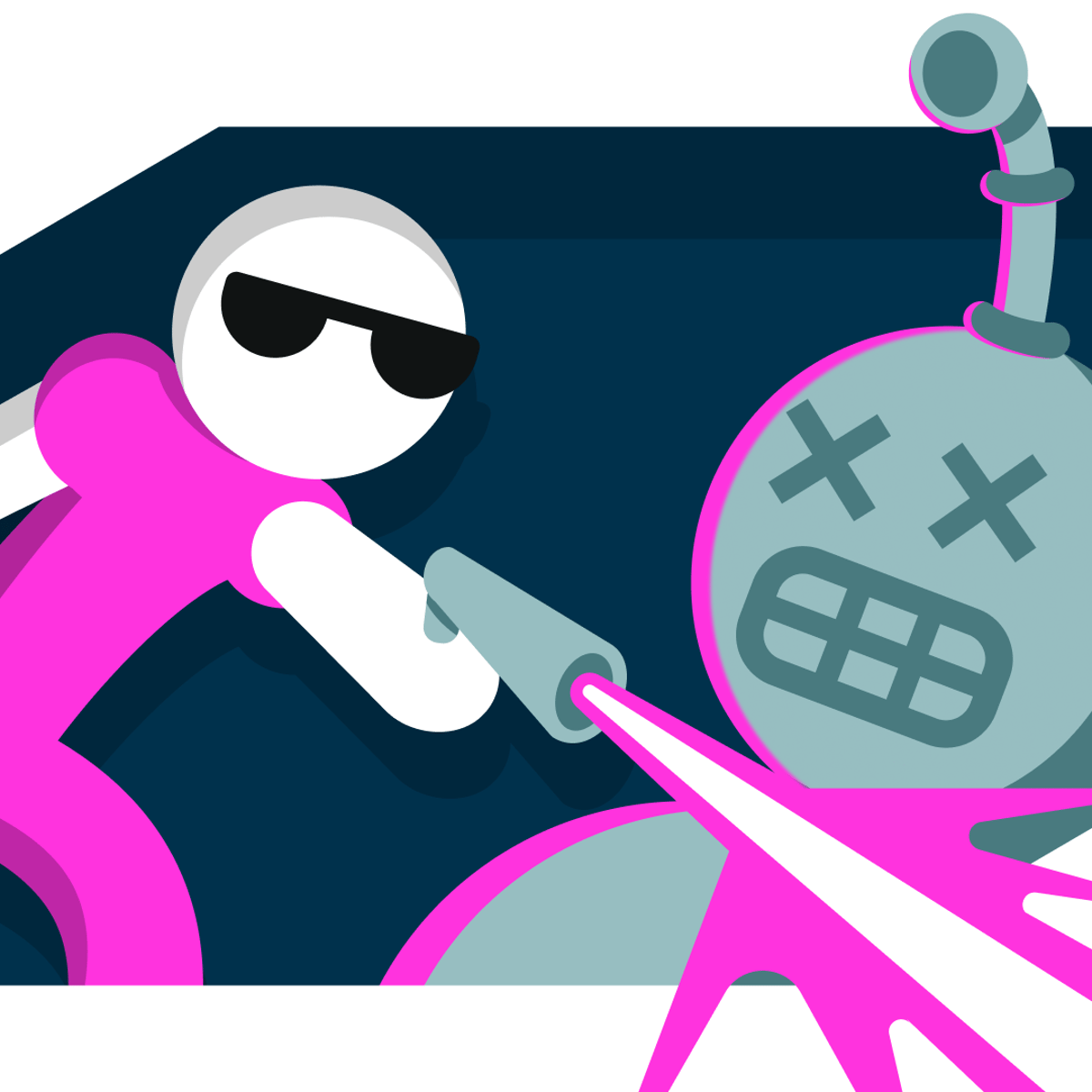
We Become What We Behold
You get a camera. You’re dropped into a world of simple shapes. Squares and circles shuffle around a little town square, chatting, dancing, bumping into each other. At first, your job feels obvious: just record what happens. Snap a picture of a square dancing with a circle, and the news runs a feel-good story about cross-shape unity. But point your lens at a minor squabble over a hat, and suddenly the headline is about deep societal rifts. Within minutes, suspicion spreads. Neighbors eye each other sideways. Fights break out between shapes that were perfectly happy a moment ago. Before you even realize how it happened, the whole town is at war—and you started it with a single click.
That’s the brutal loop at the heart of We Become What We Behold. It’s less a game and more a visceral, ten-minute demonstration of how media shapes reality. Indie developer Nicky Case built it to show how the stories we choose to tell can warp and poison the world we perceive. There’s no score, no unlockables, no reason to replay it except to feel that gut-punch of understanding again. The minimalist visuals make the message sharper. These aren’t people—they’re shapes with dots for eyes. And yet, you’ll feel genuinely guilty for what you’ve done to them.
How It Works
The mechanics are simple, almost too simple. You don’t control a character walking around. You control the media’s eye. Your camera hovers over the scene like a news chopper, and you decide what’s worth a story.
Your Goal: Advance the narrative by taking photos that shift public opinion. The story doesn’t run on a clock or through dialogue choices. It reacts to what you document and how the news spins your shots.
Controls:
- On desktop: Move your mouse to aim the viewfinder. Left-click to take a photo. That’s it. The real skill is in choosing what to point at and when.
- On mobile or tablet: Drag your finger to aim. Tap to snap. The experience is the same—just touch-based.
There’s no inventory, no health bar, no dialogue options. The camera is your only tool. Clicking is your only action. Everything that follows comes from that one mechanic, which is why the lesson cuts so deep. You can’t blame clunky controls. You did this. Your finger clicked the button.
Getting the Most Out of It
Playing We Become What We Behold well isn’t about reflexes. It’s about watching closely and understanding what your lens actually does to the world you’re framing.
- Watch Before You Shoot. Don’t start snapping pictures the second you load in. Take fifteen or twenty seconds just to observe. You’ll see little stories unfold on their own—a circle and a square sharing a laugh, someone sitting alone, two shapes walking side by side. These quiet moments establish the normal baseline the game will soon wreck. The emotional punch comes from the contrast between “before” and “after.” You need to see the peace to appreciate its loss.
- Frame the Story. Your viewfinder doesn’t show the whole town. Where you point it matters. If you see tension brewing—maybe one shape bumped another and now they’re gesturing angrily—drift closer and wait. Catching the peak moment of anger, the exact frame where fists are raised, leads to a much more inflammatory broadcast than photographing the lead-up. The news doesn’t want context. It wants the money shot.
- See the Feedback Loop. This is the core of how the game works. You take a photo. The news reports it with a spin. The shapes see the report and their behavior changes. Those changed behaviors create new events for you to photograph. A photo of one confused shape might become a headline about “WIDESPREAD DREAD,” causing everyone to panic—which gives you even more dramatic footage. Once you spot this cycle, you realize you’re not documenting reality. You’re building it, one headline at a time.
- Let It Burn. Once chaos erupts, you’ll want to keep photographing every violent outburst. That works, but sometimes it’s better to pull back and watch the disaster you’ve created. At a certain point, the society you’ve poisoned will generate its own horrors without your help. The background shapes start copying the aggression they’ve seen on the news. Shapes that were minding their own business suddenly carry weapons. Stepping back and seeing the full scale of the damage—that’s when the game’s point truly hits home.
- Listen to the Soundtrack. The music changes with the social climate. Early on, it’s light and playful. As tensions grow, the audio becomes tense and discordant. These shifts aren’t just mood-setting—they’re signals. When the music changes, something in the town has changed too. Look for what’s different in the crowd.
Where Players Go Wrong
New players often misread their role in the system.
- Thinking You’re Neutral. This is the biggest mistake. You might believe your job is to record events fairly. It isn’t. Every photo is fuel. The game’s narrative runs on conflict. If you only photograph happy, positive moments, you won’t create peace—you’ll just stall the story until conflict appears on its own, which it always does. You aren’t a reporter. You’re an accelerant.
- Hesitating Too Long. The world moves on whether you’re ready or not. If two shapes start arguing and you take too long to decide whether to photograph it, they might make up. They shake hands and walk away. The media loses its fuel, and the story stalls. Be ready to click when the moment is hot.
- Ignoring the Quiet Cues. The game transitions between stages, and it gives you hints. A new character might walk into frame wearing something odd. The crowd might shift from scattered chatting to huddled groups. The music key changes. If you’re only focused on obvious fights, you’ll miss the quieter moments that set the stage for the explosion. Those setup shots are often your most important photos.
- Quitting Too Early. Some players see the world falling apart, feel a wave of guilt or frustration, and close the browser. That’s understandable—the game is designed to make you uncomfortable. But the ending is the whole point. It connects your specific actions to the outcome in a way you can’t dismiss. Stick with it for the full ten minutes. The conclusion re-frames everything you just did.
Common Questions
Q: How long does a playthrough take?
A: About five to ten minutes. You won’t need a guide. The game respects your time and delivers its point fast. That said, the feeling of it sticks with you a lot longer than the session itself.
Q: Can I play it on my phone?
A: Yes. It works in any modern mobile browser—phone or tablet. The tap-to-snap and drag-to-aim controls feel natural on a touchscreen. No app install needed.
Q: Are there multiple endings?
A: No. The story always ends the same way. Your photos affect the path—which headlines run, how fast society unravels—but the conclusion is fixed. The game has one argument to make, and it makes it every time.
Q: Is it suitable for children?
A: The look is simple. No blood, no gore—just colored shapes with dot eyes. The themes, though, deal with media-fueled paranoia, mob behavior, and social collapse. It’s better for older teens and adults who can think through the commentary without being upset by the escalating violence.
Q: Why did this game get so popular?
A: It’s free, it runs in a browser, and it takes less time to finish than a coffee break. The subject—how framing warps public feeling—is something everyone understands, not just gamers. And the design is clean: it teaches through doing, not telling. You don’t read about propaganda. You practice it, one photo at a time, and then live with what you’ve made.
Q: Who is Nicky Case?
A: Nicky Case is an indie developer who makes interactive explainers and short browser games about complex systems. Their other projects explore ideas like trust, epidemics, and communication, all through playful, simple interfaces. We Become What We Behold is their most widely shared work, but it fits with a portfolio of games that help you feel something you might have only understood before.
It takes just a few minutes to see how a small story can start a big fire. What lingers is the realization that this isn’t just about shapes. It’s a mirror held up to every screen you’ve ever watched.