




Who is? 2 Brain Puzzle & Chats
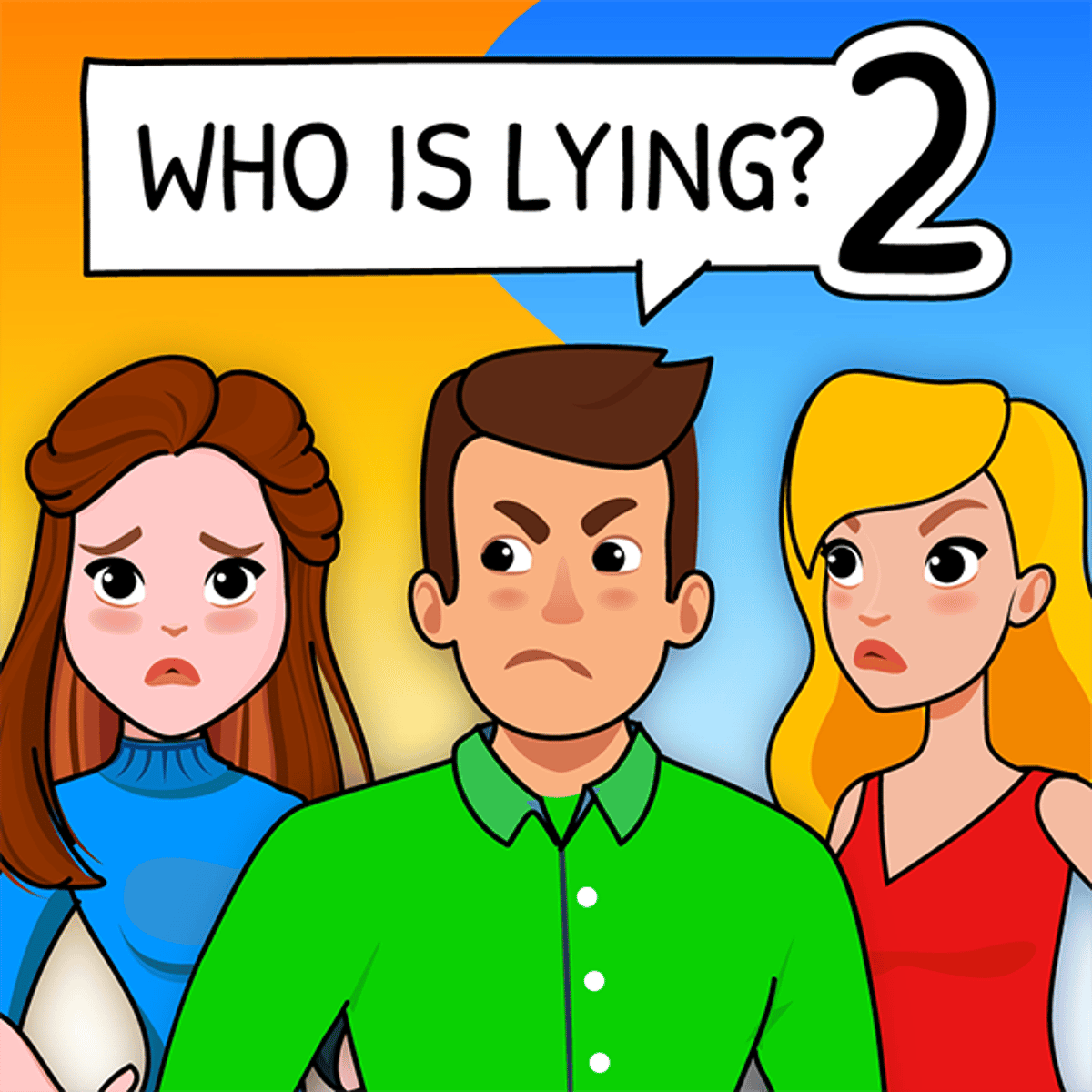
Some games sneak up on you. Who is? 2 Brain Puzzle & Chats looks simple, but before you know it, an hour’s gone. No tile matching or math drills here. This one asks you to do something more human: talk to people, read between the lines, figure out who’s lying. It’s part detective work, part social simulation, and entirely addictive.
The premise is simple: you’re dropped into a text conversation with someone who might be hiding something. Your job is to ask the right questions, catch contradictions, and expose the truth. The game doesn’t hand you a suspect list—you poke around, tap objects, and sometimes read a message twice before a clue clicks. It feels less like a traditional puzzle and more like being a nosy friend with a purpose.
What keeps people coming back is the variety. Over a hundred scenarios, each with its own cast and mystery. Some are funny, others a little dark, and a few will make you feel clever for spotting a detail everyone else missed. The chat format keeps it current—like scrolling through someone’s DMs, not a game from 2010.
How to Play
The core objective is simple: find the liar, the culprit, or the hidden truth. You interact with characters and objects in each scene. Every level presents a scenario—a conversation between two or more people, often with a visual backdrop packed with extra clues.
Controls are identical across devices. On desktop, click characters or objects with your mouse. On mobile, tap them. That’s it. No drag-and-drop, no complicated gestures. Play it one-handed while waiting for coffee or during a commute.
Once you start a level, a chat window appears. Characters send messages, and you respond by choosing from pre-written replies. Sometimes you need a specific question to unlock more info. Other times, tap something in the background—a picture, a clock, a letter—to trigger new dialogue.
Stuck? There’s a help button at the bottom of the screen. Use it. The game doesn’t penalize you for asking for a nudge, and sometimes the solution is so weird you’d never guess it without a hint.
Features
Who is? 2 isn’t a single puzzle repeated a hundred times. It has distinct features that set it apart from other brain teasers.
- Chat simulation. Each level is a text conversation. You see typing indicators, read receipts, emoji reactions. It mimics real messaging apps so closely you might forget you’re playing a game. The writing is snappy and funny, with distinct character personalities.
- Interactive environments. The chat window is only half the puzzle. The background scene—a room, an office, a street—has clickable objects that reveal extra dialogue or clues. You have to explore both conversation and visuals to get the full picture.
- Over 100 levels. That’s a lot of content. Difficulty ramps up gradually. Early levels ask you to find the obvious liar; later ones require piecing together a timeline or noticing a subtle inconsistency in someone’s story.
- Generous hint system. Get a hint, skip a level, or watch an ad to unlock the solution. Keeps frustration low, though purists may want to solve everything on their own.
Tips and Strategies
This isn’t a game you can brute-force by tapping everything randomly. You have to think. Here are some things that actually help.
- Read every message twice. First pass, you’re just taking in the conversation. Second pass, pay attention to times, names, places. A character says they were at the library at 3 PM, but another message shows they were texting at that exact moment. That’s your clue.
- Tap on everything in the background. Even if it looks decorative, click it. A plant pot might hide a note. A clock might show the wrong time. The developers love hiding info in plain sight.
- Pay attention to who says what. Sometimes the liar is obvious because their story doesn’t match a visible object. Other times, the real culprit is the quiet one who barely speaks. Don’t assume the loudest character is guilty.
- Use hints sparingly but without guilt. Stuck for ten minutes? Take a hint. The game is meant to be fun, not a slog. Hints usually point you toward the object or question you missed, not the whole solution.
- Think like a detective, not a gamer. Many puzzle games rely on trial and error. Here, it’s logic. If a character says they were alone but their chat shows they were replying to someone else, that’s a contradiction. Treat each level like a mini investigation.
Common Mistakes
New players tend to fall into a few traps. Here’s what to watch for.
- Tapping too fast. Blazing through dialogue means missing crucial details. Slow down. The game doesn’t time you.
- Ignoring the background. Many focus on the chat and forget to tap objects. That’s where half the clues are hidden. Always scan the scene first.
- Choosing the wrong response. Multiple reply options. Some are filler or jokes; others are key to moving forward. If you keep hitting dead ends, try a different response—even if it seems rude or off-topic.
- Assuming every level has a liar. Not all puzzles are about finding who’s lying. Some ask you to find the object that doesn’t belong, or piece together a sequence. Read the objective carefully before accusing anyone.
- Overusing hints. The hint button is great, but using it on every level means you’ll never learn the patterns. Solve at least the first few on your own to get a feel for the game’s logic.
FAQ
Is Who is? 2 free to play?
Yes, free on Poki and other platforms. Optional ads for hints, but no paywall blocking progress.
Can I play on mobile?
Absolutely. Works on phones, tablets, and desktop browsers. Controls are the same—tap or click.
Is this a sequel?
Yes, it’s the follow-up to Who Is? (the first game). You don’t need to have played the original, but if you did, you’ll recognize the style.
Who made this game?
Who is? 2 Brain Puzzle & Chats was developed by Unico Studio, the team behind the Brain Test series and Word City games.
How many levels are there?
Over 100 scenarios. New ones added in updates—the latest in September 2025.
##
Whether you’re killing time on a bus or looking for something that actually makes you think, Who is? 2 delivers. It’s clever without being pretentious, respects your intelligence, and lets you take the easy way out when needed. Just don’t blame me if you end up scrutinizing your friends’ texts a little more closely afterward.