
Gobble
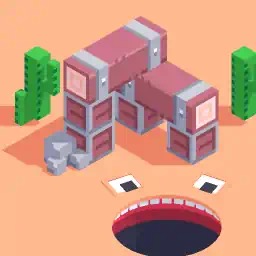
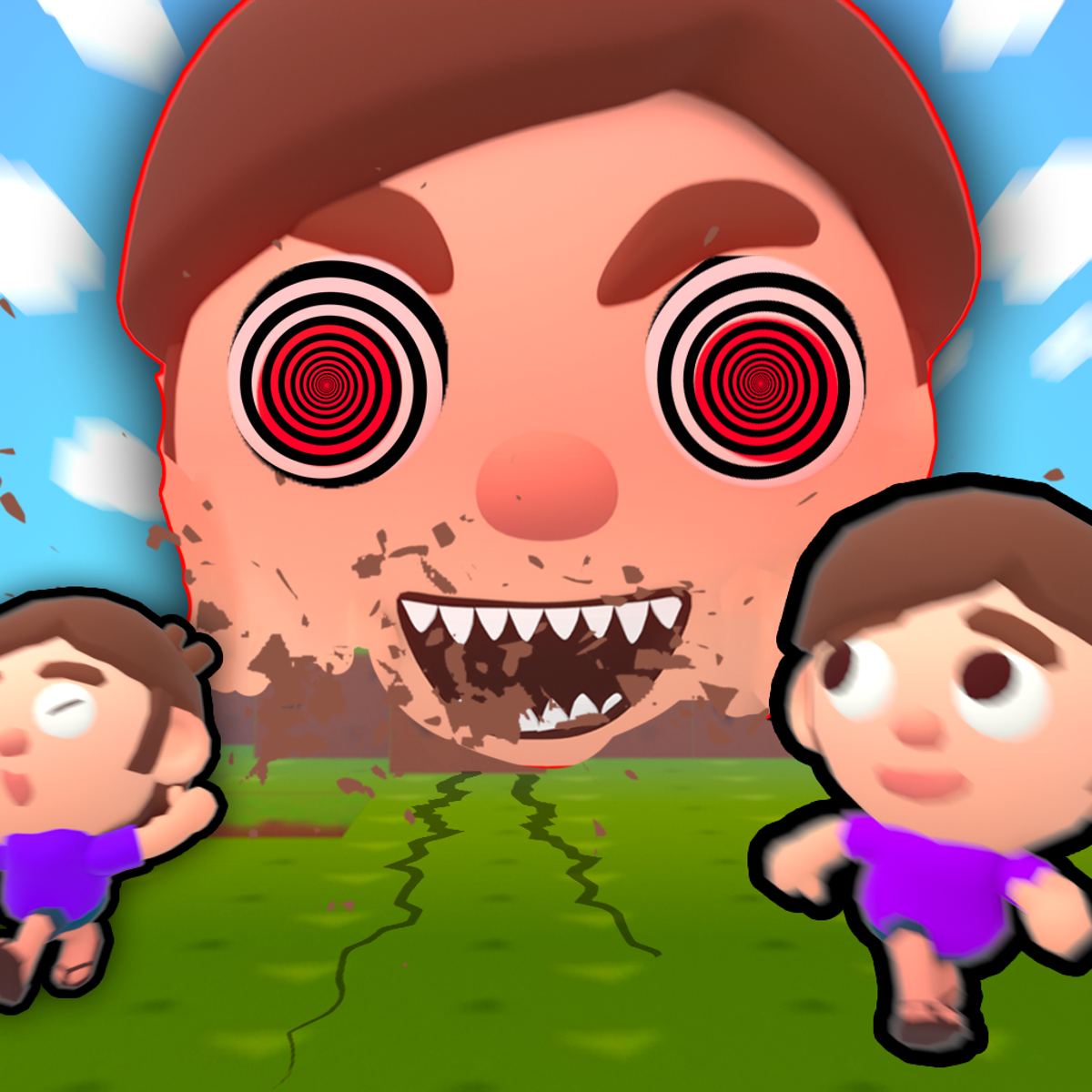
Gobble gives you one rule to follow: eat everything in sight except people. That’s the whole game. You control a giant mouth chomping through dirt, tasked with clearing every object from the board—cacti, boxes, rocks, trees—while steering clear of any human figures. Sounds simple, right? It’s a setup that takes about five seconds to understand and dozens of levels to truly master.
Fancade, the studio behind hits like Drive Mad and Stacktris, launched Gobble on browsers in mid-2023. It found a huge audience fast, and its appeal is obvious. Each puzzle is brief, cleverly constructed, and pitched at a difficulty that makes you feel smart when you nail it and annoyed at yourself when you don’t. The pacing is sharp—you complete one stage, ride that small win, and immediately get a slightly harder variant that twists the mechanics you just learned.
What makes it stick is how physical it feels. This isn’t about matching symbols or tapping colors. You’re dragging a gaping maw across a patch of earth, watching it crunch through obstacles with playful animations and oddly satisfying sound effects. It’s a puzzle game cleverly disguised as a sandbox of destruction, and the disguise works perfectly.
How to Play
The goal is simple: clear every object without eating a person. Your mouth glides along the ground, and anything it passes over disappears. Once all non-human items are gone, you advance.
Desktop controls are straightforward. Use arrow keys, WASD, or click and drag to steer the mouth. Dragging offers the most precision, which becomes essential in later, tighter layouts. Keys are fine for quick directional nudges on simpler stages.
On mobile and tablet, you use touch controls—tap and drag to guide the mouth. The mechanics are identical across platforms, and Fancade’s mobile-first design philosophy means the touch input feels native, not like an afterthought.
The core loop is clean: survey the level, spot the objects and people, then plot a path that gobbles the former while avoiding the latter. Miss an object, and you’ll need to backtrack. Clip a person, and the level restarts instantly. No lives, no health bars—just a clear pass or a quick fail.
Features
Gobble avoids cluttering itself with extra modes or menus. The experience is a continuous stream of puzzle levels, one after another, with no stage select or overworld map. You just keep moving forward.
What prevents repetition is how each new set of puzzles introduces a fresh twist. Early stages are wide open—objects scattered plainly, people standing out, plenty of space to maneuver. As you progress, layouts tighten. Objects get tucked behind obstacles. People wander closer to your targets. Some levels pack items into narrow corridors, demanding almost surgical pathing.
The visual design also evolves. New environmental elements appear, and puzzles start combining familiar mechanics in ways that require more thoughtful planning. Fancade excels at this kind of escalating challenge. They rarely introduce something entirely alien; instead, they layer new constraints on old ones until a level that looks simple actually takes a few attempts to solve.
The game also saves your progress, so you can close the browser and return later to pick up where you left off. It’s a handy feature for a game built for short, satisfying sessions.
Tips and Strategies
Scout before you move. Taking ten seconds to observe a level is the biggest advantage you can give yourself. Note where every object and person is. Mentally trace a route before you start dragging. This habit feels unnecessary early on, but it becomes crucial as layouts grow more complex.
Work from the outside in. Most levels place objects along the edges and corners. Eating the perimeter first gives you more room to work toward the center, where people often cluster. Diving straight for the middle can box you into a tight spot.
Use long, sweeping paths. Gobble rewards fluid movement over quick, choppy bites. Plan continuous arcs that sweep across multiple objects in a single pass. Fewer moves mean fewer chances to accidentally veer into someone.
Pay attention to spacing between people. Sometimes a gap that looks too narrow is actually wide enough for your mouth to fit through. Other times, a comfortable-looking gap is deceptively tight. Get a feel for your mouth’s hitbox early on by testing safe zones. Once you internalize its size, threading the needle becomes second nature.
Don’t rush the restart. When you eat a person—and you will—don’t just slam the retry button and try the same path faster. Pause. Figure out exactly where you went wrong and adjust your route. Speed rarely solves a puzzle that planning would have prevented.
Watch for objects near people. The game loves placing a tempting tree or rock right next to a person. The safe approach is to come from the side opposite the person, eat the object, and pull back before your trajectory carries you too far. Precision beats speed here.
Common Mistakes
Going too fast. This is the top reason people fail levels they shouldn’t. Gobble looks like an arcade game and triggers a “go go go” instinct, but it’s a puzzle at heart. Racing through usually means eating someone you could have avoided with a couple seconds of patience.
Ignoring the last object. Many players clear ninety percent of the board cleanly, then panic on the final item because it’s dangerously close to a person. They rush the approach, clip the human, and have to redo the whole level. Plan your route so the riskiest item is eaten when you have the most room to maneuver—usually early or mid-run, not at the end.
Tunnel vision on one object. It’s easy to fixate on a single tricky item and forget about the rest of the board. Then you eat that one thing perfectly and realize your path has trapped you with no safe way to reach the remaining objects. Always think about the full sequence, not just the next bite.
Underestimating wide-open levels. Some stages look deceptively simple—just a few objects and a couple of people with lots of space between them. New players treat these like freebies and move carelessly. The simplicity is the trap. Without walls or obstacles to guide your path, it’s easier to drift into a person by accident.
Not adjusting to new mechanics. When the game introduces a new element—say, a moving person or a new type of obstacle—players often keep using the same strategies that worked before. Each new mechanic deserves a few levels of experimentation. Slow down, observe how it behaves, and adapt.
FAQ
How much does Gobble cost?
Nothing. It’s free to play directly in your browser with no download, account, or paywall. Works on desktop or any mobile device with a modern browser.
What happens if I eat a person?
The level ends immediately and you restart. There’s no penalty or life counter—you just try the puzzle again. It keeps things clean and encourages experimentation.
How many levels are there?
The game features a long, steadily escalating sequence of puzzle levels. The exact count can vary as developers occasionally update it, but there’s plenty of content to keep you busy for several play sessions.
Who made Gobble? What else have they done?
Fancade developed it. They’re also behind Drive Mad, Stacktris, Monster Tracks, Recoil, Speed King, and a bunch of other browser games. They specialize in tight, accessible games with simple mechanics and smart design.
Can I play it on my phone?
Absolutely. The game supports touch controls natively, so dragging your mouth around on a phone or tablet feels just as responsive as using a mouse on desktop. No app download needed—just open it in your mobile browser.
Gobble proves a great puzzle game doesn’t need complex systems or flashy production. One mouth, one rule, and a steady stream of clever level design—that’s all it takes to keep you clicking “next” for way longer than you planned.