




Tens!
Ever found yourself idly tapping numbers on a screen, trying to make them add up to something satisfying? Tens! turns that impulse into a full-blown puzzle. It feels more like a calm meditation than a frantic race. No timer, no pressure—just you, a grid of digits, and the quiet challenge of making everything disappear by forming groups that sum to ten.
The premise is simple: pick numbers that add up to exactly ten, and they vanish. But the board keeps refilling, and soon you’re planning three moves ahead, clearing whole sections, and feeling that rush when a chain reaction wipes out half the grid. Developed by Dial-Up Dino Games, Tens! takes the best ideas from classics like Make Ten and Fruit Box and polishes them into something that works beautifully on desktop and mobile. It’s the kind of game you open for a quick break and end up playing for twenty minutes, because each round feels just solvable enough to keep you hooked.
How to Play
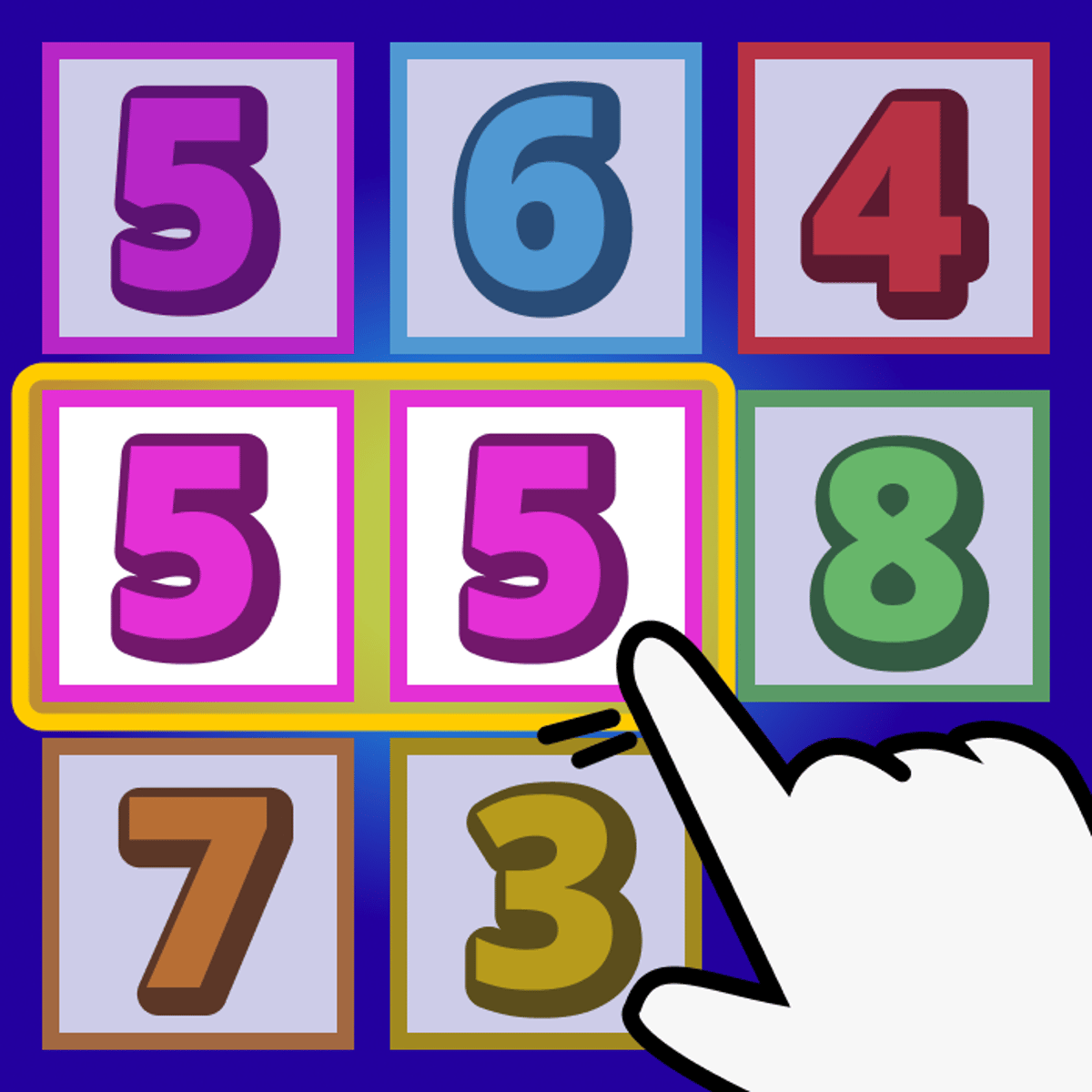
Clear numbers from the board by selecting groups that total exactly ten. You can pick two, three, or even more numbers at once—as long as they sum to ten. A 3 and a 7? Gone. A 1, 2, 3, and 4? That’s ten too. The game doesn’t care how many tiles you use, only that the math is right.
On desktop, hover your mouse over the numbers you want to select. They’ll highlight, and when you’re happy with your group, click to confirm. On mobile, just tap the tiles one by one—they’ll light up as you go. Tap a selected tile again to deselect it, or tap an empty space to clear your selection and start over. There’s no rush, so take your time.
Once you clear a set, the tiles above them drop down to fill the gaps, and new numbers appear from the top. The board is a fixed size—usually a 6x6 or similar grid—so if it fills up completely, the game ends. Your goal is to keep the board as empty as possible for as long as you can. The game tracks your score based on how many tiles you clear, and there’s a hint button in the corner if you get stuck. Hints highlight a valid combination, but they’re limited, so use them wisely.
Features
Tens! doesn’t have multiple game modes or flashy power-ups, and that’s part of its charm. Instead, it focuses on a single, polished experience that anyone can pick up in seconds. Here’s what makes it stand out:
- No time limit. Stare at the board for a full minute without penalty. This isn’t a speed game; it’s a strategy game. The only pressure comes from the board slowly filling up, and even that happens at a relaxed pace.
- Hint system. When you’re truly stuck, a hint shows you one possible move. It’s a gentle nudge, not a cheat—you still have to decide if that move is the best one.
- Cross-platform play. It works on desktop browsers, phones, and tablets. The controls adapt naturally: mouse clicks on PC, finger taps on mobile. No download required, just open the page and play.
- Calming flow. The clean design, soft colors, and lack of timers create a calming atmosphere. It’s easy to lose yourself in the rhythm of selecting and clearing, like a fidget toy that actually makes you think.
- Infinite replayability. Because the board regenerates randomly, no two games are the same. You can play for five minutes or an hour, and the core challenge remains fresh.
Tips and Strategies
Tens! looks simple, but good players know that random tapping won’t get you far. Here’s how to keep the board manageable and rack up high scores.
Look for multi-tile combos. A 3 and 7 is obvious, but a 1-2-3-4 combo clears four tiles at once, freeing up more space. The more tiles you clear in one move, the more new numbers drop in, which can create cascading opportunities. Train your eye to spot longer chains.
Plan around the board’s edges. Tiles on the edges and corners are harder to clear because they have fewer neighbors. If you let them pile up, they can block your access to the middle. Prioritize clearing edge tiles early, even if it means using a less efficient combo. A cleared corner is a victory.
Don’t waste hints on easy boards. Hints are limited—usually around three per game. Save them for when the board is nearly full and you’re one move away from losing. A hint can buy you a few more turns, but if you use them on trivial situations, you’ll regret it later.
Think about what’s coming next. After you clear a set, new tiles fall from above. If you clear a column completely, the new tiles will stack in that column, potentially creating fresh combos. Try to clear entire columns or rows to control where new numbers land. This is especially useful when you see a 9 and a 1 at the top—leave them there until you can drop them into a good spot.
Practice mental math. The numbers range from 1 to 9, so any combination that sums to ten is valid. Common pairs: 1-9, 2-8, 3-7, 4-6, 5-5. But don’t forget triples like 1-2-7, 1-3-6, 2-3-5, or even 1-2-3-4. The more patterns you recognize instantly, the faster you’ll play.
Use the whole board. Don’t fixate on one area. Scan the entire grid for opportunities. Sometimes a 5-5 pair is hiding in a corner, or a 1-4-5 triple is scattered across the board. A quick sweep every few moves can reveal combos you missed.
Common Mistakes
New players often fall into the same traps. Here’s what to watch out for.
Grabbing the first combo you see. It’s tempting to click a 4 and 6 right away, but that might block a better move later. For example, if you have a 4, 6, and a 1, clearing the 4-6 leaves the 1 stranded. Instead, look for a 1-4-5 or 1-3-6 that clears more tiles. Patience pays off.
Ignoring the board’s layout. Clearing tiles in the middle might open up space, but it also lets new numbers drop into unpredictable spots. Sometimes it’s smarter to clear from the top down, so new tiles land on a relatively empty board. If you clear from the bottom, you risk creating a cascade that fills the board faster.
Using hints too early. Some players burn all three hints in the first minute, then panic when the board gets crowded. Hints are a safety net, not a crutch. Try to solve the board yourself first; use a hint only when you’ve stared at it for ten seconds and see nothing.
Forgetting that 5+5 is a thing. It sounds obvious, but when you’re scanning quickly, two 5s can blend into the background. Always check for duplicate numbers—they’re often the easiest way to clear a pair.
Playing too fast. There’s no timer, so why rush? Take a breath between moves. A slow, deliberate approach almost always beats frantic clicking. The game rewards thought, not speed.
FAQ
Is Tens! free to play?
Yes, it’s completely free on Poki. No downloads or purchases required.
Can I play on my phone?
Absolutely. It works on both desktop and mobile browsers. Tap the numbers on your phone just like you would click them on a computer.
What happens when the board fills up?
If no empty spaces remain and you can’t make a move, the game ends. Your score is based on how many tiles you cleared during that round.
How do hints work?
Tap the hint button (usually a lightbulb icon) and the game will highlight one valid combination. You get a limited number per game, so use them sparingly.
Is there a time limit?
No. You can take as long as you want on each move. The only “pressure” comes from the board gradually filling up, but that happens at a steady, unhurried pace.
---
Tens! is one of those rare puzzle games that respects your time and your brain. It’s easy to learn, hard to master, and oddly soothing. Whether you’re killing five minutes or settling in for a longer session, it delivers exactly what a good number puzzle should: a clean challenge that keeps you coming back for one more round.