








Feets Doctor Urgent Care
There’s a certain morbid curiosity that comes with seeing a nasty foot injury. Feets Doctor Urgent Care taps right into that. It’s a simulation game where you play a doctor whose specialty is, well, feet—specifically, feet that have been through the wringer. Cuts, splinters, burns, blisters, you name it. And somehow, it’s incredibly satisfying.
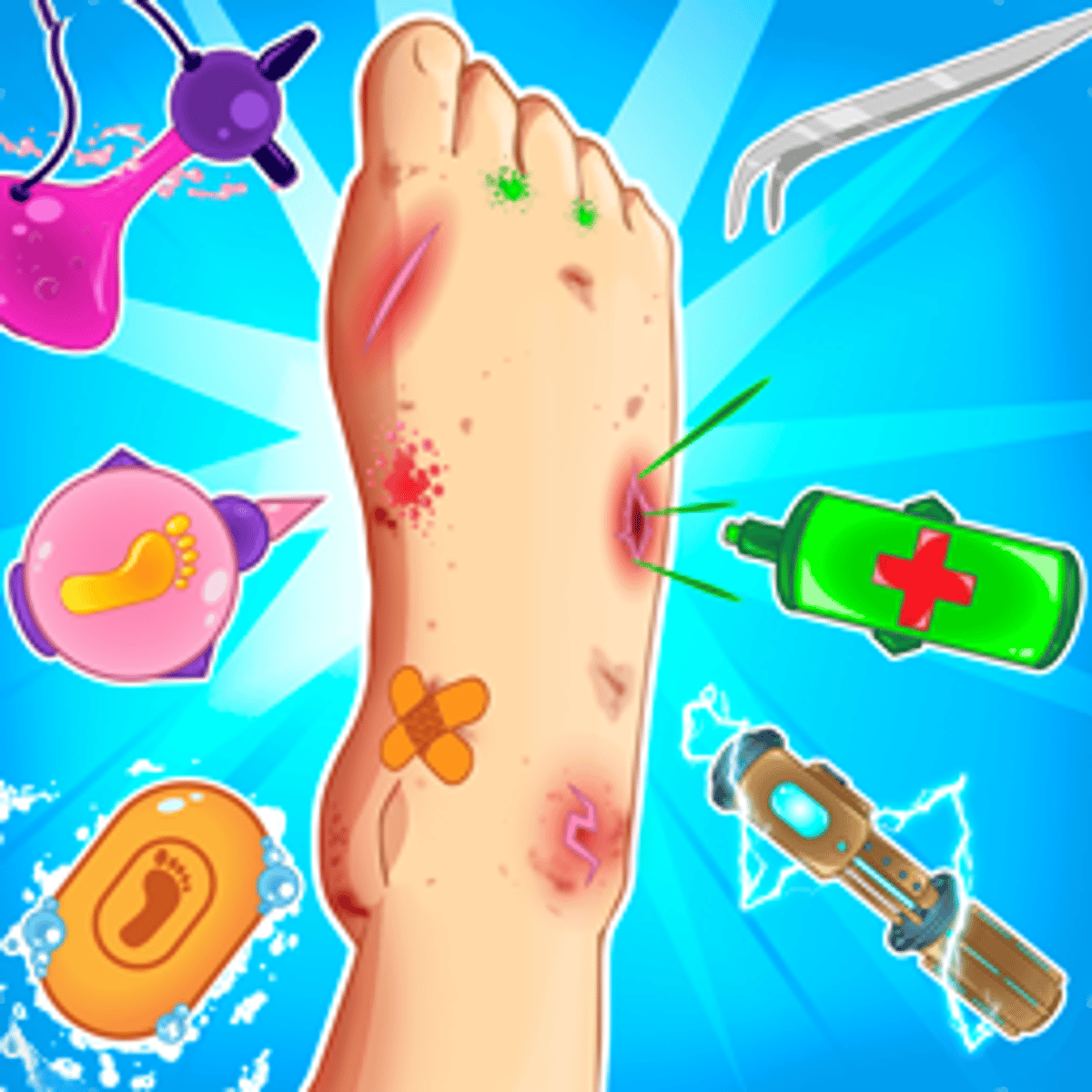
The game doesn’t try to be realistic in a gritty way. It’s more like a cartoon medical drama where you’re the only competent staff member. Patients come in with exaggerated, almost comical injuries, and it’s your job to clean them up, pull out debris, apply bandages, and send them on their way. The loop is simple: examine, treat, repeat. But the variety of injuries and the tactile feel of the tools keep you coming back. It’s the kind of game you play for “just one more patient” and suddenly an hour has passed.
The key is the balance between gross-out fun and genuine problem-solving. You have to figure out the right order of operations—clean before you cut, disinfect before you bandage—or you’ll make things worse. It’s a lighthearted take on medical procedures that doesn’t take itself too seriously, but still rewards careful thinking. Plus, the sound effects are hilariously squishy.
How to Play
The objective is straightforward: treat each patient’s foot injury completely and correctly. You’ll start with a basic set of tools—tweezers, scissors, antiseptic wipes, bandages, and sometimes a scalpel or syringe. Each case presents a different problem: a deep cut with embedded glass, a nasty blister that needs draining, a splinter buried under layers of dead skin, or even a burn that requires careful cleaning and ointment.
On desktop, you use the mouse. Click to pick up a tool from the tray, then drag it to the area you want to treat. For example, if there’s a splinter, you grab the tweezers, position them over the splinter, and click to pull. Some actions require multiple steps—like cutting away dead skin before you can reach the debris underneath. The cursor changes to show you’re in the right spot, and a progress bar or visual cue tells you when you’re done.
On mobile, it’s all touch. Tap a tool to select it, then drag your finger over the affected area. The controls are intuitive and responsive; you can zoom in by pinching if you need a closer look. The game was clearly designed with touchscreens in mind, so it feels natural on a phone or tablet. The only downside is that your fingers can sometimes block the view, but you get used to it.
The game doesn’t have a timer, so you can take your time. But there’s a subtle pressure: if you mess up—say, use the wrong tool or skip a step—the patient reacts with a pained expression, and you lose points. You’re graded on accuracy and speed at the end of each case, which encourages replaying to get a perfect score.
Features
Feets Doctor Urgent Care doesn’t have distinct “game modes” like a story mode versus endless mode, but it does have a few notable features that keep the gameplay fresh:
- Dozens of unique injuries. No two cases are exactly alike. You’ll see everything from simple cuts to infected wounds with pus, weird growths, and even objects lodged inside the foot. The variety is impressive for a browser game.
- Tool progression. As you advance, you unlock new tools. Early on you’re just cleaning and bandaging. Later, you’ll use scalpels to make incisions, syringes to drain fluids, and even a small saw for extreme cases. Each tool has a specific use, and learning when to apply them is part of the challenge.
- Patient reactions. The patients aren’t just static feet. They flinch, groan, and sometimes thank you. It adds a tiny bit of personality to an otherwise clinical task. Some patients are more sensitive than others, so you have to be gentle.
- Replay value. After you finish all the cases (there are quite a few), you can replay any of them to improve your score. The grading system (stars out of three) gives you a reason to go back and perfect your technique.
There’s no multiplayer or leaderboard, which is fine—this is a solo, chill experience. It’s more about the satisfying process than competition.
Tips and Strategies
After treating a lot of virtual feet, here’s what I’ve learned:
- Always clean first. Before you cut or pull anything, use the antiseptic wipe to clean the area. If you skip this, you risk infection, which costs you points. Plus, cleaning often reveals hidden debris that you might have missed.
- Zoom in for precision. On desktop, scroll to zoom. On mobile, pinch. The game doesn’t force you to be pixel-perfect, but getting close helps you see exactly where the splinter ends or where the cut starts. It’s especially useful for tiny fragments.
- Use the right tool for the job. This sounds obvious, but it’s easy to grab tweezers when you really need a scalpel. If the tool doesn’t seem to be working, try another. The game gives subtle hints—the patient’s foot will twitch or the tool will glow red if you’re using it wrong.
- Don’t rush the bandaging. After you’ve cleaned and removed everything, apply the bandage smoothly. If you drag it too fast, it might not stick properly. Slow, deliberate movements work best.
- Watch for secondary issues. Sometimes a cut has a splinter inside it, or a blister has an infection underneath. Treat the most visible problem first, then check for hidden ones. If the patient still looks pained after you think you’re done, you probably missed something.
- Replay tough cases. If you only get one star, don’t sweat it. Come back later with more experience. The second time around, you’ll know exactly what to do and can aim for a perfect score.
Common Mistakes
New players tend to make the same errors. Here are the big ones:
- Using the scalpel too early. The scalpel is for cutting open skin to reach deeper problems. But if you use it on a surface-level cut, you’ll just make the wound worse. Only use it when you see a clear indication that you need to cut (like a swollen area that needs draining).
- Ignoring the antiseptic. Some players think they can just pull out a splinter and bandage it. Nope. Without cleaning, the wound gets infected, and you lose points. Always disinfect before and after removing debris.
- Dragging too fast. The game’s controls are sensitive. If you drag the tweezers or scalpel too quickly, you’ll miss the target or cause extra damage. Slow down. It’s not a race.
- Forgetting to check the whole foot. Sometimes there’s a small cut on the side or bottom of the foot that you overlook because you’re focused on the main injury. Rotate the view (if available) or look carefully at all angles.
- Using the same tool repeatedly. If something isn’t working, switch tools. Stubborn debris might need a different approach. The game is designed so that each injury has a specific solution—there’s no one-size-fits-all tool.
FAQ
*Is Feets Doctor Urgent Care free to play?*
Yes, it’s completely free in your browser. No downloads or payments required. There are no ads that interrupt gameplay, though you might see some on the page around the game.
Can I play on my phone?
Absolutely. It works on both iOS and Android through a browser. The touch controls are well-optimized, so it feels like a native app.
How many levels or cases are there?
There are over 30 different cases, each with a unique injury. Some are quick, others take a few minutes. The game doesn’t have an endless mode, but you can replay any case.
Is it appropriate for kids?
The injuries are cartoonish and not gory in a realistic way. There’s no blood or graphic violence—just colorful, exaggerated wounds. It’s fine for most ages, though very young children might find the concept a little gross.
Why do I sometimes get a low score even when I finish?
Your score depends on accuracy, tool usage, and how gently you treat the patient. If you use the wrong tool, skip cleaning, or drag too roughly, you’ll lose points. Aim for a steady hand and follow the steps in order.
---
Feets Doctor Urgent Care is one of those browser games that proves you don’t need flashy graphics or complex mechanics to be addictive. It’s just you, a pair of tweezers, and a parade of unfortunate feet. Give it a try—you might be surprised how much you enjoy playing doctor.