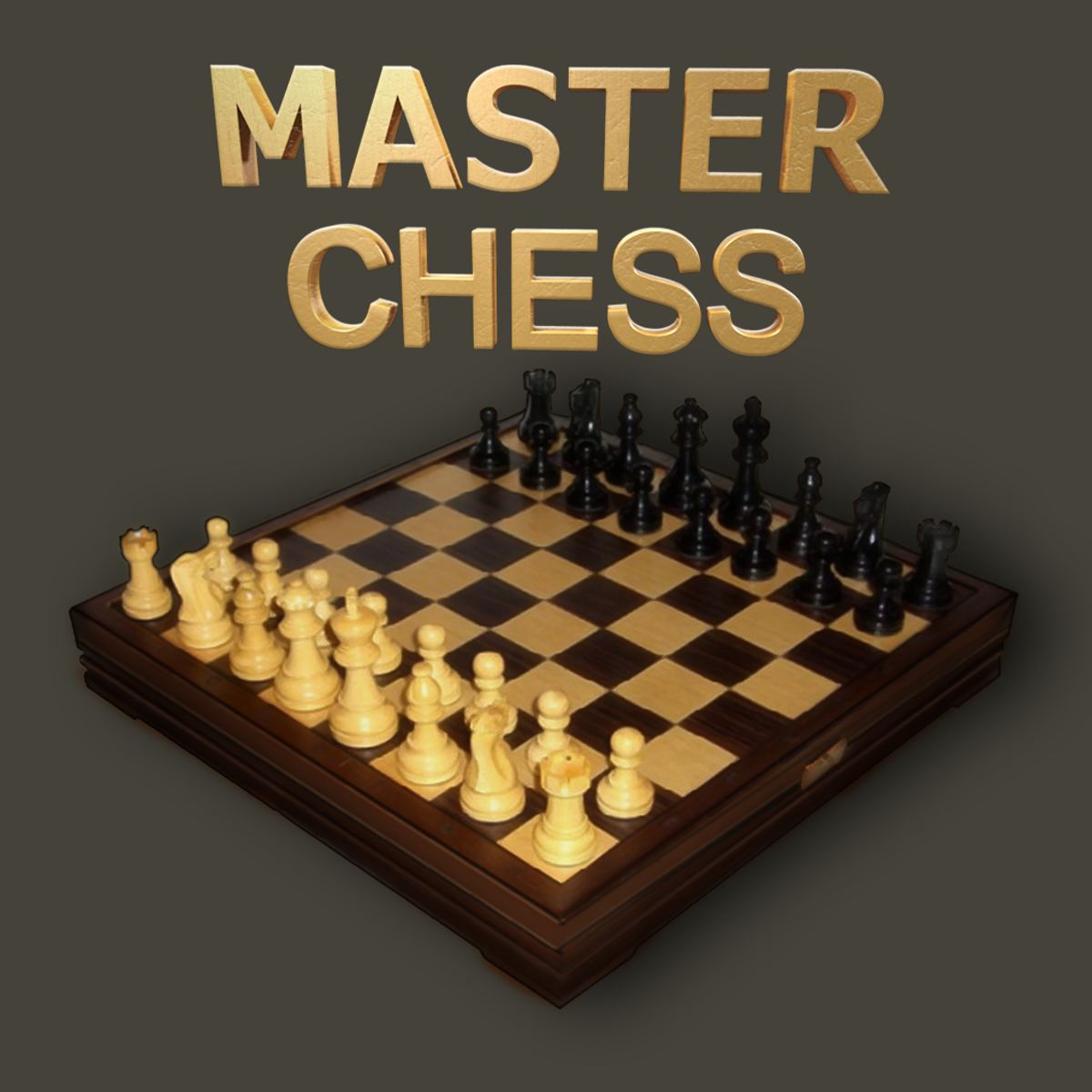
Master Chess
Chess has no flashy gimmicks. No power-ups, no cutscenes. Sixty-four squares, thirty-two pieces, and the quiet thrill of outthinking a human opponent—that’s the timeless appeal. Master Chess delivers exactly that. Developed by Codethislab and launched in 2019, this browser-based version has logged millions of plays, and its staying power comes from a clean, no-fuss presentation. It just works.
Whether you’ve got ten minutes between meetings or want a serious match with a friend on the same keyboard, you’re playing in seconds. No accounts, no downloads. You open the page, pick a mode, and the board appears. The pieces are distinct, the controls are responsive, and the whole package feels polished without overdesign. This is chess served up for people who actually want to play chess.
What keeps players returning is the challenge. The AI scales from beginner-friendly to genuinely tough opponents that punish mistakes hard. And when you want a true test, you can go head-to-head with another person on the same device. Master Chess doesn’t reinvent anything—it just makes sure the fundamentals work perfectly every time.
How to Play
The goal is standard chess: checkmate your opponent’s king. If you know the rules, you’re set. If not, this is a decent place to learn, though you might want to review how each piece moves first.
On desktop, it’s all mouse-driven. Click a piece to see its legal moves highlighted. Click the square you want, and the move happens. Try an illegal move, and nothing occurs—the game stops you automatically. No right-click menus or keyboard shortcuts. Point, click, play.
Mobile and tablet controls translate cleanly to touch. Tap a piece, see the options, tap your destination. Codethislab optimized the interface for smaller screens, so squares are large enough to avoid mis-taps. It runs in both portrait and landscape, though landscape offers a more comfortable view of the full board.
One useful detail: the game handles special moves automatically. Castling, en passant, pawn promotion—they all trigger when legal. When a pawn reaches the back rank, a promotion prompt lets you choose a new piece. You don’t need to memorize the rules for these scenarios; the engine manages them.
Game Modes
Master Chess provides three distinct ways to play.
Single Player vs. AI is the natural starting point. You face a computer opponent across the board. The AI has two settings. Easy is forgiving—it blunders, misses traps, and lets you experiment without getting demolished. Hard is relentless. It calculates deeply, exploits positional errors, and grinds you down if you’re sloppy. Beating the hard AI consistently means you’re a strong player.
Two Player (Local) turns one screen into a shared battlefield. You and a friend take turns on the same device. There’s no timer by default, so you can think as long as needed. It’s perfect for settling disputes, passing time at a café, or just enjoying chess face-to-face the old-fashioned way.
Online Multiplayer matches you against other players over the internet. You don’t choose your opponent—the system pairs you. This mode brings unpredictability because no two humans think alike. Some favor aggressive openings, others defend patiently. Every game feels different.
Tips and Strategies
Control the center early. The four central squares—e4, d4, e5, d5—are the board’s prime real estate. Pieces placed there have more mobility than those on the edges. Openings like the Italian Game (1.e4 e5 2.Nf3 Nc6 3.Bc4) or the Queen’s Gambit (1.d4 d5 2.c4) fight for this space immediately. Let your opponent occupy it unchallenged, and you’ll be reacting all game.
Don’t bring your queen out too early. The queen is powerful, but deploying her on move three or four often backfires. Your opponent will develop pieces with tempo—attacking your queen while mobilizing their own. You’ll waste moves retreating her while they build a lead. Keep her in reserve until the position opens and you have supporting pieces ready.
Castle before things get messy. Castling tucks your king behind pawns and connects your rooks—exactly what you want in the middlegame. Aim to castle within the first ten moves. A king stuck in the center becomes vulnerable to pawn breaks or rook lifts.
Think about your opponent’s threats, not just your plans. After each move, ask: “What does that attack? What’s the idea here?” Chess is a dialogue. Every move should respond to something—a direct threat or a long-term positional idea. Focus only on your own plans, and you’ll miss forks and pins you never saw coming.
Trade pieces when you’re ahead. If you’ve won material, look for equal trades—rook for rook, bishop for bishop, knight for knight. Each exchange simplifies the position, moving you toward an endgame where your extra piece dominates. Fewer pieces mean fewer complications for your opponent.
Practice endgames. Most casual players neglect endgames, but that’s a mistake. Many games—especially at club level—reach this phase. Knowing basic king-and-pawn endings versus not knowing them makes a huge difference. Study the Lucena position, the Philidor position, and the concept of opposition. These alone will convert draws and losses into wins.
Common Mistakes
Hanging pieces. The most frequent error below expert level is leaving pieces undefended where your opponent can take them free. Before you move, scan the board: does this leave anything unprotected? A five-second check avoids handing over a bishop for nothing.
Moving the same piece repeatedly in the opening. Development matters. Every move spent repositioning an already-active piece is a move not used to bring a new piece into play. Get your knights and bishops off the back rank and castle before launching attacks.
Ignoring pawn structure. Pawns shape the game. Doubled, isolated, or backward pawns create long-term weaknesses your opponent can target. Avoid unnecessary pawn moves, especially ones that create holes near your king.
Playing too fast in online matches. There’s no shot clock in most modes, so use your time. Players who blitz out moves in three seconds lose to those who take fifteen to find the right idea. You don’t need to overthink every move, but pause when positions get complicated.
Failing to resign lost positions. Down a queen with no compensation? There’s no shame in resigning and starting fresh. Dragging out a completely lost game wastes both players’ time and teaches little. Save your energy for the next match.
FAQ
Is Master Chess really free to play?
Yes. It runs in your browser with no cost. No account or payment required. Just open the page and start.
How strong is the hard AI?
Genuinely challenging for casual and intermediate players. It rarely blunders, punishes tactical mistakes, and plays solid positionally. Advanced club players should beat it, but it’s not easy. Newcomers should start on easy.
Can I play on my phone?
Absolutely. It works well on mobile browsers and tablets. Touch controls are responsive, and the board scales to fit different screens. Both portrait and landscape orientations are supported.
Does the game track my wins and losses?
No. There’s no persistent match history or rating. Each session is standalone. To track improvement, you’d need to keep your own notes.
Is there a move timer?
Not in local or single-player modes. Think as long as you like. This makes it a stress-free environment for learning.
What happens if I stalemate my opponent?
The game recognizes stalemate as a draw—when your opponent has no legal moves but isn’t in check. It also handles threefold repetition and the fifty-move rule correctly, applying standard chess rules throughout.
Master Chess doesn’t pretend to be more than it is. It’s a fast-loading, fair-playing browser chess game with enough depth to keep you coming back. Whether you’re warming up against the easy bot, battling a friend on one keyboard, or testing yourself online, it delivers what chess promises: a pure mental challenge. Open a tab, set up the board, and make your move.