



Maze: Path of Light
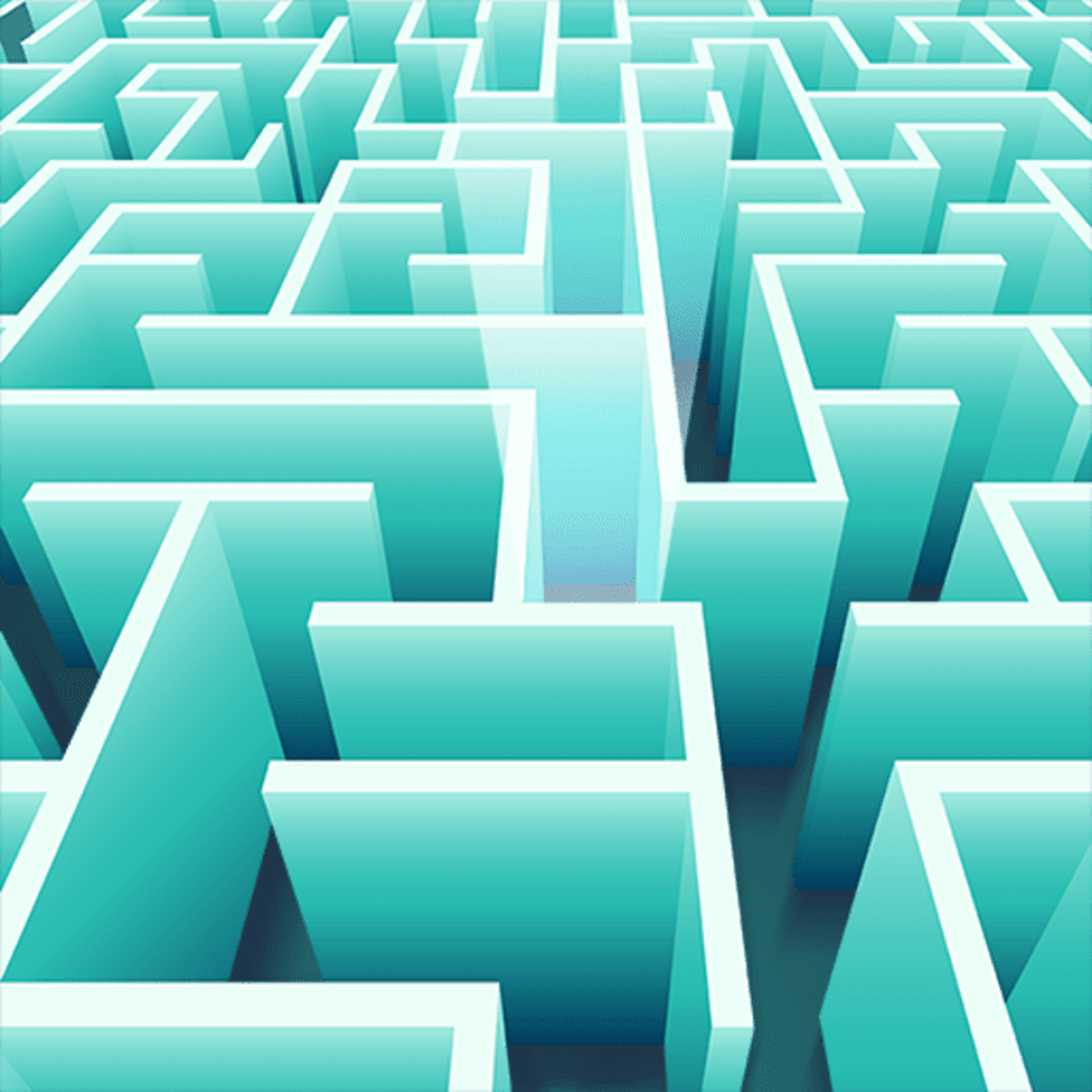
Some puzzle games throw everything at you—explosions, timers, weird power-ups, a dozen buttons to press. Maze: Path of Light does the opposite. It gives you a single beam of light, a tangled network of paths, and one simple goal: get that light to the exit. That’s it. And yet, once you start playing, it’s surprisingly hard to stop.
The game comes from InfinityGames.io, a developer that knows how to strip a concept down to its essentials. You’ve probably seen their other titles—Infinity Loop, Energy, Sudoblocks—all clean, minimal, and quietly addictive. Maze: Path of Light follows the same philosophy. No story, no characters, no fluff. Just you, a maze, and a glowing cursor waiting for your decision. The puzzles start easy, almost too easy, but within a few dozen levels you’ll find yourself staring at a tangle of lines, trying to trace a viable path with your eyes before you click.
What keeps people coming back? Part of it is the sheer volume of content. The game boasts thousands of mazes, each one procedurally generated or hand-tuned to feel fresh. You never hit a wall where you’ve seen every trick. Another part is the feedback loop: each successful solution gives you a small visual reward—the light races to the exit, the maze lights up, and you feel a little rush of satisfaction. It’s the same satisfaction you get from finishing a crossword or solving a Rubik’s cube, but faster and more immediate.
The game has been played by hundreds of thousands of people since its release in May 2022, and it’s still getting updates (the latest was June 2023). With a rating of 4.2 out of 5 from over half a million votes, it’s clearly doing something right. Let’s break down exactly how it works and how you can get good at it.
How to Play
The objective is dead simple: guide a beam of light from its starting point to the exit portal. The maze is made up of intersections and straight corridors. At each intersection, you choose which direction the light should turn—left, right, or straight ahead. Once you make your choice, the light moves along that path until it hits the next intersection, where you choose again. You keep doing this until either the light reaches the exit (you win) or it hits a dead end (you lose and have to restart the level).
On a desktop computer, you have two ways to control the action. You can click directly on the path you want to take—just point and click at the next segment. Or you can use the arrow keys (up, down, left, right) or the WASD keys to indicate your direction. The arrow keys are handy if you prefer keeping your hands on the keyboard, but clicking is often faster because you can see exactly where you’re aiming. I switch between the two depending on the complexity of the maze. For simple, straight corridors, arrows work fine. For tangled intersections where I need to aim at a specific branch, I use the mouse.
On mobile devices, the controls are even simpler. You just tap the direction you want to go. The game adapts to touch screens well—the intersections are big enough that you won’t accidentally tap the wrong path. If you’re playing on a tablet, you can use your finger or a stylus; both work equally well. The mobile version is fully optimized, so you get the same experience as on desktop, just with touch input.
One thing to note: the light moves automatically along the path you choose. You don’t have to hold down a button or drag anything. It’s a turn-based system at its core: you decide, the light moves, you decide again. There’s no time pressure, no speed requirement. You can sit and stare at the maze for as long as you want before making a move. That’s a relief, because some of the later mazes require serious planning.
The game does not have a traditional lives system or energy bar. You can restart a level as many times as you want without penalty. That encourages experimentation. If you make a wrong turn, you learn something about the maze’s layout, and you can try again with that knowledge. It’s a forgiving puzzle game that rewards patience over speed.
Features
Maze: Path of Light doesn’t clutter itself with multiple modes or gimmicks. It’s a single, focused experience. But that doesn’t mean it’s bare-bones. Here are the main features that define the game:
Thousands of levels. The game claims thousands of mazes, and based on the progression, that’s not an exaggeration. You start with simple 3x3 grids and gradually work your way up to sprawling networks that fill the screen. The difficulty curve is smooth—you never hit a sudden spike that feels unfair. Each new level introduces a slightly more complex arrangement of paths, forcing you to think a little harder.
Procedural generation with hand-tuning. The mazes are generated algorithmically, but the developer has clearly put effort into making sure they’re solvable and interesting. You won’t encounter random dead ends that make a level impossible. Every maze has at least one correct path to the exit, and often only one. The challenge is finding it.
Clean, minimal visuals. The game uses a dark background with glowing lines in bright colors—usually white or blue for the paths, yellow for the light beam, and a pulsing marker for the exit. It’s easy on the eyes and helps you focus on the puzzle. There are no distracting animations or particle effects. The light moves smoothly, but it’s not flashy.
No ads during gameplay. While the game is free to play, it doesn’t throw ads in your face while you’re trying to solve a maze. You might see an ad between levels or when you restart, but it’s not intrusive. You can also pay to remove ads entirely if you want a completely clean experience.
Cross-platform support. You can play on a desktop browser, a tablet, or a phone, and your progress is saved locally (though there’s no cloud sync). The controls adapt to each device, so you never feel like you’re fighting the interface.
Tips and Strategies
After playing through a couple hundred levels, you start to develop a feel for solving these mazes. Here’s the practical advice that will help you move from beginner to expert.
Look before you leap. The biggest mistake new players make is clicking immediately when they see an intersection. Don’t. Take a moment to scan the entire maze. Trace possible routes from your current position to the exit. Sometimes the correct path is obvious once you see the big picture, but if you click too fast, you might lock yourself into a dead end that you could have avoided.
Work backwards from the exit. This is a classic puzzle-solving technique that works beautifully here. Look at the exit and see which paths lead into it. Then follow those paths backward, intersection by intersection, to see if they connect to your starting point. Often, the maze is designed so that only one sequence of turns leads to the exit. By reversing the problem, you can eliminate wrong branches before you even start moving.
Use the process of elimination. If you’re at an intersection with three possible directions, and you can see that two of them lead to obvious dead ends (or to areas that can’t possibly connect to the exit), then the third direction is your answer. This sounds simple, but it’s easy to overlook when you’re focused on the immediate path. Train yourself to check all options before committing.
Pay attention to symmetry and patterns. Many mazes in the game are symmetrical, or they follow a repeating pattern. If you notice that the left half of the maze mirrors the right half, you can often solve it by focusing on one side and then applying the same logic to the other. Not all mazes are symmetrical, but enough are that it’s worth checking.
Don’t be afraid to restart. The game lets you restart a level instantly with no penalty. If you’re five moves in and you realize you made a mistake early on, it’s often faster to restart than to try to remember the correct sequence. Use the restart as a tool. Each restart teaches you something new about the maze layout.
Use peripheral vision. When the maze gets large and complex, your eyes might try to follow every line at once. Instead, relax your gaze and let your peripheral vision take in the overall shape. You’ll often spot the exit or a key corridor that you missed when you were staring directly at it.
Practice on easy levels. It’s tempting to rush through the early levels, but they’re designed to teach you fundamental patterns. Spend time on them until you can solve them without thinking. That builds the mental muscle memory you’ll need for the harder mazes.
Common Mistakes
Even experienced players fall into the same traps. Here are the most common mistakes that trip people up, along with how to avoid them.
Clicking too fast. The number one mistake. You see an intersection, you click a direction, and two seconds later you realize you just walked into a dead end. Slow down. There is no timer. The game rewards patience.
Assuming all paths are equal. In many mazes, one path looks shorter or more direct, but it’s a trap. The correct path often takes a longer, winding route. Don’t judge a path by its length; judge it by where it leads.
Ignoring the edges of the maze. The exit is always on the edge of the grid, but sometimes it’s tucked into a corner that’s easy to overlook. Similarly, the starting point might be in an unexpected spot. Always check the perimeter before you start moving.
Forgetting that you can’t change direction mid-corridor. The light only stops at intersections. If you commit to a long straight path, you’re stuck with it until you reach the next intersection. Make sure that path is actually taking you somewhere useful before you choose it.
Trying to memorize the entire maze. You don’t need to remember every twist and turn. Focus on the immediate decision in front of you, and use the restart feature to learn incrementally. Trying to hold the whole maze in your head is exhausting and unnecessary.
Not using the hint system (if available). Some versions of the game include a hint button that shows you the next correct move. Don’t be proud. If you’re stuck for more than a minute, use the hint. It’s better than getting frustrated and quitting.
FAQ
Is Maze: Path of Light free to play?
Yes, it’s completely free. You can play it in your browser without downloading anything. There are optional ads and an in-app purchase to remove them, but you can enjoy the full game without spending a cent.
How many levels are there?
The game advertises thousands of mazes. The exact number depends on updates, but you’ll have plenty of content to keep you busy for hours. New levels are added periodically.
Can I play on my phone?
Absolutely. The game works on both desktop and mobile browsers. On a phone, you tap the direction you want to go. The interface scales well, so even on a small screen you can see the maze clearly.
What happens if I make a wrong move?
If you choose a path that leads to a dead end, the light stops and the level resets. You can restart immediately and try a different route. There’s no penalty, no lives, and no waiting.
Is there a time limit?
No. You can take as long as you want on each maze. The game is purely about logic and spatial reasoning, not speed.
Does the game work offline?
You need an internet connection to load the game, but once it’s loaded, it runs entirely in your browser. If you lose connection mid-game, you might not be able to save progress, but the game itself will still play.
If you’re looking for a puzzle that respects your time and challenges your brain without overwhelming you, Maze: Path of Light is a solid choice. It’s the kind of game you can play for five minutes during a coffee break or sink an hour into on a lazy Sunday. Give it a try—just remember to look before you click.