



Nuts and Bolts: Screwing Puzzle
If you’ve ever wrestled with a knot of charging cables, you get the appeal of Nuts and Bolts: Screwing Puzzle. It’s a game about unscrewing things—methodically, carefully, and with growing satisfaction as a tangle of metal plates finally falls apart. The twist? You can only hold a few screws at a time, so every move has to count.
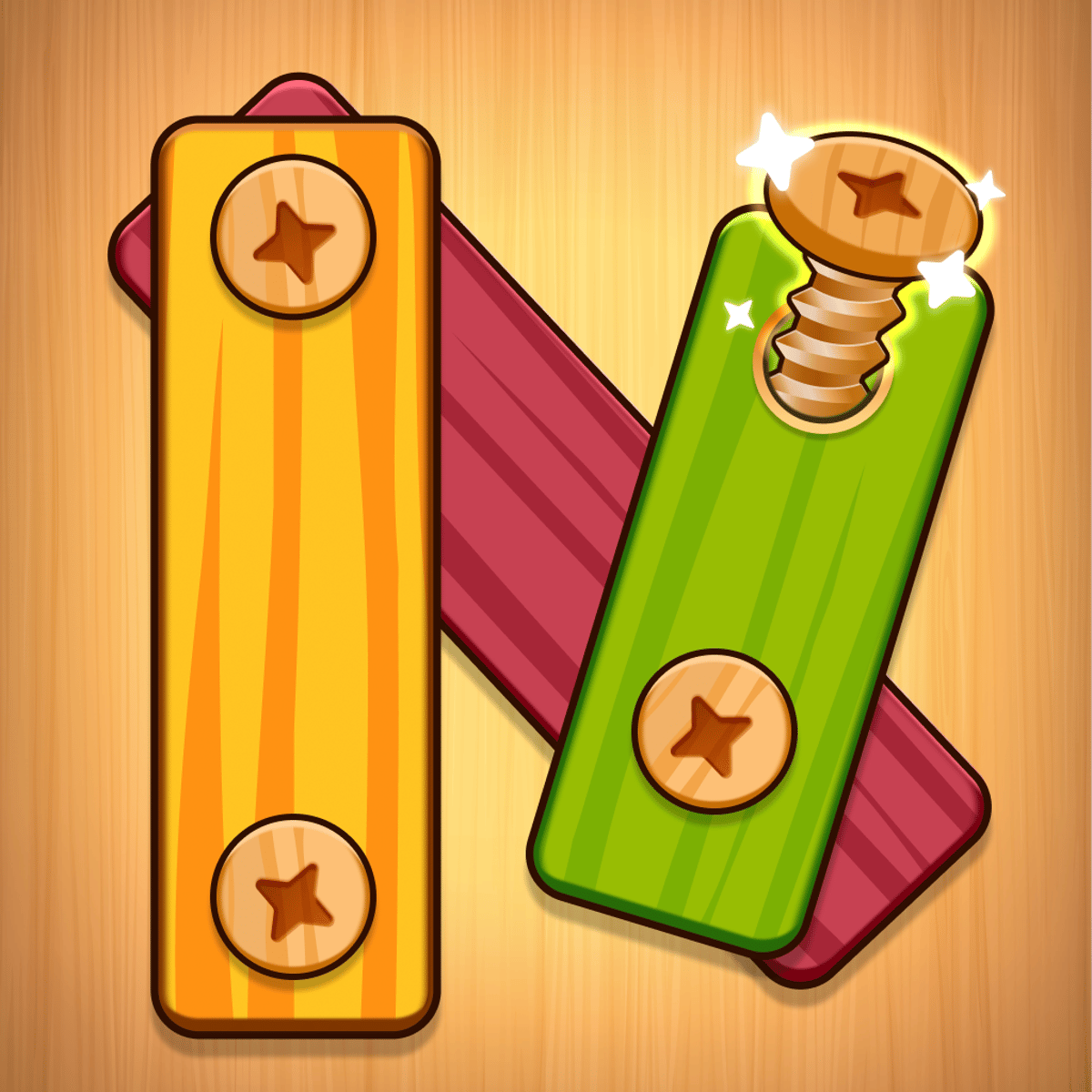
Developed by Unico Studio (the same folks behind the Brain Test series), this puzzle game landed in August 2024 and has found a following among spatial reasoning fans. It’s free, runs in a browser, and works just as well on a phone as on a desktop. The premise is simple: you see a structure made of iron plates, bolts, and nuts, all held together by screws. Your job is to remove every screw and disassemble the whole thing. But the screws aren’t just sitting there waiting—they’re often blocked by other plates, and you’ve only got a handful of empty slots to stash them in.
The “just one more level” pull is real. Each puzzle is a little brain teaser that takes maybe a minute or two, but the difficulty escalates quickly. You start with straightforward arrangements and soon find yourself staring at a three-dimensional tangle where one wrong move means you have to restart. The game doesn’t punish you harshly—there are hints and tools—but it does reward careful planning.
How to Play
The objective is simple: remove all screws from the structure so the metal pieces fall away. You do this by clicking or tapping a screw, then placing it into one of the empty slots at the top of the screen. Those slots are your limited inventory—usually three or four, sometimes more on harder levels. Once a screw is out, the plates it was holding might shift, slide, or drop, revealing new screws underneath.
On desktop: Use your mouse. Click any screw that isn’t blocked by a plate or another screw. A green highlight usually shows which screws are accessible. Then click an empty slot to move it there. You can also click a screw already in a slot to put it back into the structure—useful if you change your mind or need to free up space.
On mobile: Tap the screw, then tap an empty slot. The touch controls are responsive, and the interface scales well to smaller screens. The game was clearly designed with mobile in mind—everything is big enough to tap without zooming.
Watch for hidden screws behind plates that only fall after other screws are removed. Sometimes you need to remove a screw holding a plate that blocks another screw, but you have no empty slots. That’s when you think ahead—put a screw back temporarily, or use a hint to see the solution.
The game also includes a few tools: a hint button that highlights the next screw to remove, and a “shuffle” or “undo” option (depending on the version) that lets you reverse your last move. These aren’t unlimited—you earn or buy more as you progress, but the game is generous enough to keep you moving.
Features
Nuts and Bolts: Screwing Puzzle doesn’t have traditional “game modes” like time attack or endless play. Instead, it’s a linear series of levels that gradually introduce new mechanics. Early levels are flat, two-dimensional puzzles. Later ones add layers, overlapping plates, and screws oriented at different angles. The core challenge stays the same, but the spatial reasoning gets trickier.
A few notable features:
- Hint system: When you’re truly stuck, a hint shows you exactly which screw to remove next. It’s not a full solution—you still have to figure out the order—but it’s enough to unstick you.
- Undo and restart: You can undo moves one by one, or restart the level entirely. No penalty, no loss of progress.
- Visual feedback: Screws that are accessible glow or pulse. Plates about to fall show a slight wobble. The physics feel satisfying—metal pieces clatter and slide realistically.
- Level variety: The structures aren’t just random piles. Some look like gears, others like bridges, and a few are shaped like animals or objects. It keeps the visuals fresh even if the mechanics stay the same.
There’s no timer, no score multiplier, no leaderboard. It’s a pure puzzle game—you solve it, you move on. Some players might miss the competitive edge, but the calm, methodical pace is part of the appeal.
Tips and Strategies
After a few dozen levels, you’ll start to see patterns. Here’s what works:
1. Scan the whole board before you touch a screw.
Don’t just grab the first glowing screw. Look at which plates are resting on which screws. A screw holding up three plates is usually more important than one holding just one. Removing it too early might collapse the structure in a way that blocks other screws.
2. Use your slots wisely.
You have limited space. If you remove a screw and immediately see that it didn’t help, put it back. There’s no shame in reversing a move. Sometimes you need to temporarily store a screw just to get it out of the way, then put it back later.
3. Look for “key” screws.
In many puzzles, one or two screws are the linchpin. Removing them causes a chain reaction that frees up several other screws at once. These are often the hardest to reach—blocked by plates that themselves are held by other screws. If you’re stuck, try to identify which screw, if removed, would open up the most space.
4. Don’t hoard hints.
Hints are there to be used. If you’ve been staring at a level for five minutes and have no idea what to do, use a hint. It’s better than quitting. The game gives you enough hints that you won’t run out unless you rely on them for every move.
5. Think in reverse.
Sometimes it helps to imagine the structure being built. Which screw would be the last one you’d put in? That’s probably the first one you should take out. The game’s physics are consistent—plates fall when their supporting screws are removed, so the order matters.
6. Watch the edges.
Screws on the perimeter are often easier to remove because they’re not blocked by other plates. But they’re not always the right first move. A screw in the center might be the key, even if it looks harder to reach.
Common Mistakes
New players tend to make the same errors. Avoid these:
Removing screws too quickly.
It’s tempting to just click everything that glows. But if you remove a screw holding a plate that’s blocking another screw, you might trap that second screw under a fallen plate. Suddenly you have no way to reach it, and you have to restart. Slow down.
Filling all slots with useless screws.
You only have a few slots. If you fill them with screws that aren’t helping, you’ll have no room to remove the important ones. Before you take a screw, ask: “Does removing this actually help me get to another screw?” If not, leave it for later.
Ignoring the undo button.
Some players treat the game like a no-undo challenge. That’s fine if you want the extra difficulty, but the game gives you undo for a reason. Use it. One wrong move can cascade into a dead end, and undoing that single move saves you from restarting the whole level.
Forgetting that you can put screws back.
You’re not forced to keep a screw in a slot forever. If you remove a screw, clear a path, remove another screw, and then realize you need the first screw back to hold something stable, you can put it back. The game doesn’t penalize you for changing your mind.
Overlooking hidden screws.
Some screws are completely hidden behind plates until those plates fall. If you’ve removed every visible screw and still have plates left, look for screws that might be underneath. Sometimes you need to remove a screw that seems pointless just to collapse a plate and reveal the real target.
FAQ
Q: Is the game free?
A: Yes, it’s free to play in a browser. There are optional ads and in-game purchases for extra hints or to remove ads, but you can play through the entire game without spending anything.
Q: How many levels are there?
A: The game is regularly updated. As of mid-2025, there are several hundred levels, with new ones added periodically. The difficulty increases steadily, so you won’t run out of challenges anytime soon.
Q: Can I play on mobile?
A: Yes. It works on both phones and tablets. The controls are touch-friendly, and the game runs smoothly on most devices. You can play in a mobile browser or through the Poki app.
Q: What happens if I run out of hints?
A: You can earn more hints by watching short ads or by completing levels. You can also purchase hint packs, but it’s not necessary—the game gives you enough free hints to get through tough spots.
Q: Is there a time limit?
A: No. You can take as long as you want on each puzzle. There’s no timer, no pressure. It’s a relaxed puzzle game meant for thinking, not speed.
Q: Why does the game sometimes show an ad?
A: The game is supported by ads. You’ll see a short ad after completing a level or when using certain features. You can remove ads with a one-time purchase if they bother you.
---
Nuts and Bolts: Screwing Puzzle is one of those games that feels obvious once you get the hang of it, but that first dozen levels will test your patience in a good way. It’s not flashy, it doesn’t need to be. The satisfaction of watching a tangled mess of metal collapse into a neat pile of plates is enough. If you like puzzles that make you think with your hands, give it a try. Just remember to breathe, and don’t be afraid to undo a move.