




Shenzhen Mahjong
Classic Mahjong solitaire fans who’ve wished for more pandas and less clicking should meet Shenzhen Mahjong. It takes the familiar tile-matching premise and flips it: instead of picking off exposed tiles from a pyramid, you slide an entire board of cute animal icons around until matching pairs line up. The result is a fast, brain-tickling puzzle that feels less like a card game and more like a sliding-block riddle.
The game comes from Adgard, a developer known for turning simple concepts into addictive time-sinks. Shenzhen Mahjong is no exception. It launched in May 2025 and has already racked up over 41,000 votes on Poki, sitting at a solid 4.1 rating. That’s not just because the animals are adorable—though they are—but because the core loop is surprisingly deep. You’re not just matching tiles; you’re planning moves, managing a timer, and occasionally slapping a power-up when the board gets messy.
What keeps people coming back is that “one more try” feeling. The boards are randomized enough that no two games play the same, and the time pressure forces you to think on your feet. It’s the kind of game you fire up during a coffee break and suddenly realize you’ve been late for a meeting for ten minutes.
How to Play
The objective is simple: clear the board by matching all pairs of identical animal tiles before the timer runs out. But the way you do that is where Shenzhen Mahjong stands apart from traditional Mahjong games.
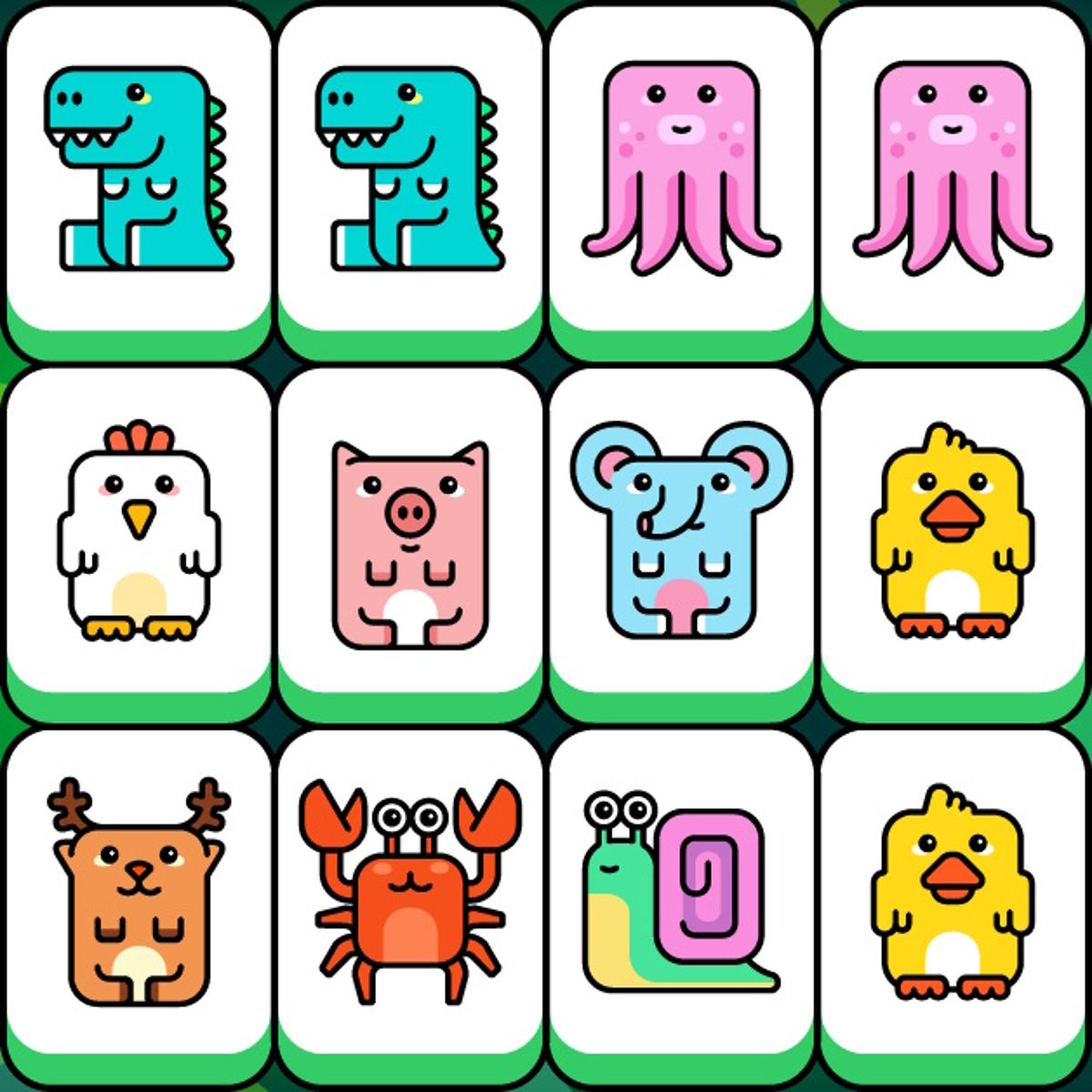
You start with a grid of face-up tiles, each showing a different animal—pandas, cats, dogs, rabbits, and a few others I can’t identify without a zoology degree. The tiles are arranged in a rectangular layout, not a stacked pyramid. That means no tiles are blocked by others on top of them. Instead, the challenge is spatial: you need to slide entire rows or columns to bring matching tiles together.
Controls
Desktop (mouse): Click a tile to select it. Then hold down the mouse button and drag the tile in any direction—up, down, left, or right. The entire row or column of tiles shifts that way, pushing any tiles at the edge off the board (they wrap around or disappear, depending on the layout). When two matching tiles end up adjacent after a slide, they both vanish. You can also just click a tile and then click an adjacent empty space to slide it there, but dragging feels more natural.
Mobile (touch): Tap a tile to select it, then drag your finger in the direction you want to slide. The same row/column movement applies. On a phone screen, the tiles are big enough to tap accurately, and the drag gesture works smoothly. No precision tapping needed—just swipe.
The game also includes a few power-ups. A “shuffle” button randomizes the board if you’re stuck. A “hint” button highlights a possible match. And a “pause” button stops the timer so you can think without panic. Use them wisely—they’re limited per level.
Features
Shenzhen Mahjong doesn’t have multiple game modes in the traditional sense—no “endless” or “challenge” variants. It’s a straightforward level-based puzzle game. But that’s not a knock; the levels ramp up in difficulty nicely.
- Level progression: Early levels have small grids (maybe 4x4) with few tile types, so matches are easy. By level 10 or so, the grid expands, more animal types appear, and the timer gets tighter. You’ll start sweating around level 15.
- Timer mechanic: Each level gives you a set amount of time—usually between 60 and 120 seconds. If time runs out, you lose. But you can earn extra seconds by making quick matches. The game rewards speed, not just accuracy.
- Score system: You get points for each match, with a multiplier for consecutive quick matches. There’s no leaderboard on Poki, but the score is displayed at the end, so you can compete with yourself.
- Visual style: The animal tiles are colorful and chunky, with a clean, cartoonish art style. No distracting backgrounds or flashy effects—just the board and a timer. It’s easy on the eyes for long sessions.
One thing I appreciate: the game doesn’t bombard you with ads between every level. You get a short ad maybe every five levels, which is reasonable for a free browser game.
Tips and Strategies
After spending more hours than I’d like to admit on this game, here’s what actually works.
1. Don’t just slide randomly. It’s tempting to start swiping tiles around hoping something sticks, but that wastes time. Instead, scan the board for tiles that are already close to each other. If you see two pandas three tiles apart in the same row, slide the row to bring them together. Focus on pairs that are one move away.
2. Plan your slides to affect multiple pairs. A single slide can line up more than one match if you’re clever. For example, sliding a row left might bring two cats together and also move a dog next to its twin. Look for these double-dip opportunities—they save precious seconds.
3. Use the hint button early, not late. The hint highlights a possible match. If you’re stuck, use it within the first 20 seconds. Waiting until the last 10 seconds just adds panic. The hint doesn’t penalize you, so treat it as a learning tool.
4. Shuffle only as a last resort. The shuffle button rearranges all tiles randomly. That can break a deadlock, but it also resets any progress you’ve made in positioning. Use it only when you’ve exhausted all obvious moves and the hint shows nothing.
5. Keep an eye on the timer, but don’t stare at it. Glance at the timer every few moves. If you’re below 30 seconds, start making faster, less optimal moves. A quick match is better than a perfect one that times out.
6. Practice pattern recognition. After a few levels, you’ll start recognizing which animals appear most often. The game uses a fixed set of maybe 12-15 animal types per level. Memorize their positions quickly—your brain will get faster with repetition.
Common Mistakes
New players tend to fall into a few traps. Here’s what to watch out for.
Sliding tiles off the edge without thinking. When you slide a row, tiles at the far end wrap around to the other side. That can actually help, but beginners often slide a tile off the board and lose track of where it went. Always visualize the wrap-around effect. If you slide a row right, the rightmost tile reappears on the left. Use that to your advantage.
Ignoring the timer until it’s too late. It’s easy to get absorbed in a tricky board and forget the clock. Then suddenly you have 10 seconds left and you’re frantically swiping. Set a mental checkpoint: every time you make a match, check the timer. Build that habit.
Using power-ups too early. I’ve seen players shuffle the board on the first move because they didn’t see an immediate match. That’s a waste. Give yourself at least 10 seconds to scan. The board almost always has at least one match available.
Focusing only on one area of the board. The grid can be large, and it’s tempting to work on the left side while ignoring the right. But matches can be anywhere. Train your eyes to scan the whole board in a Z-pattern (top-left to bottom-right) every few seconds.
Forgetting that you can slide rows and columns. Some players only slide horizontally. But vertical slides are just as important. A vertical slide can bring two tiles together that are in the same column but different rows. Use both directions freely.
FAQ
Q: Is Shenzhen Mahjong free to play?
A: Yes, it’s completely free on Poki. No download or registration required. You just open the page and start playing.
Q: Can I play on my phone?
A: Absolutely. The game works on both desktop and mobile browsers. The touch controls are smooth, and the tiles resize to fit your screen.
Q: How many levels are there?
A: The game doesn’t display a total level count. It seems to generate levels procedurally or has a very large set. I’ve played through level 30 and it kept going. Expect a long play session if you’re hooked.
Q: What happens if I run out of time?
A: You lose the level and have to retry. But you can restart immediately—no waiting or penalty. The game encourages trial and error.
Q: Are there any in-app purchases?
A: No. The game is ad-supported but has no microtransactions. You can’t buy extra time or power-ups with real money. It’s a pure skill-based puzzle.
Closing Thoughts
Shenzhen Mahjong takes a classic formula and makes it feel fresh by swapping static tile selection for dynamic sliding. It’s easy to learn, hard to master, and surprisingly generous with its difficulty curve. Whether you’re a Mahjong veteran or someone who just wants a quick brain workout, this game delivers. Just don’t blame me when you lose track of time.